
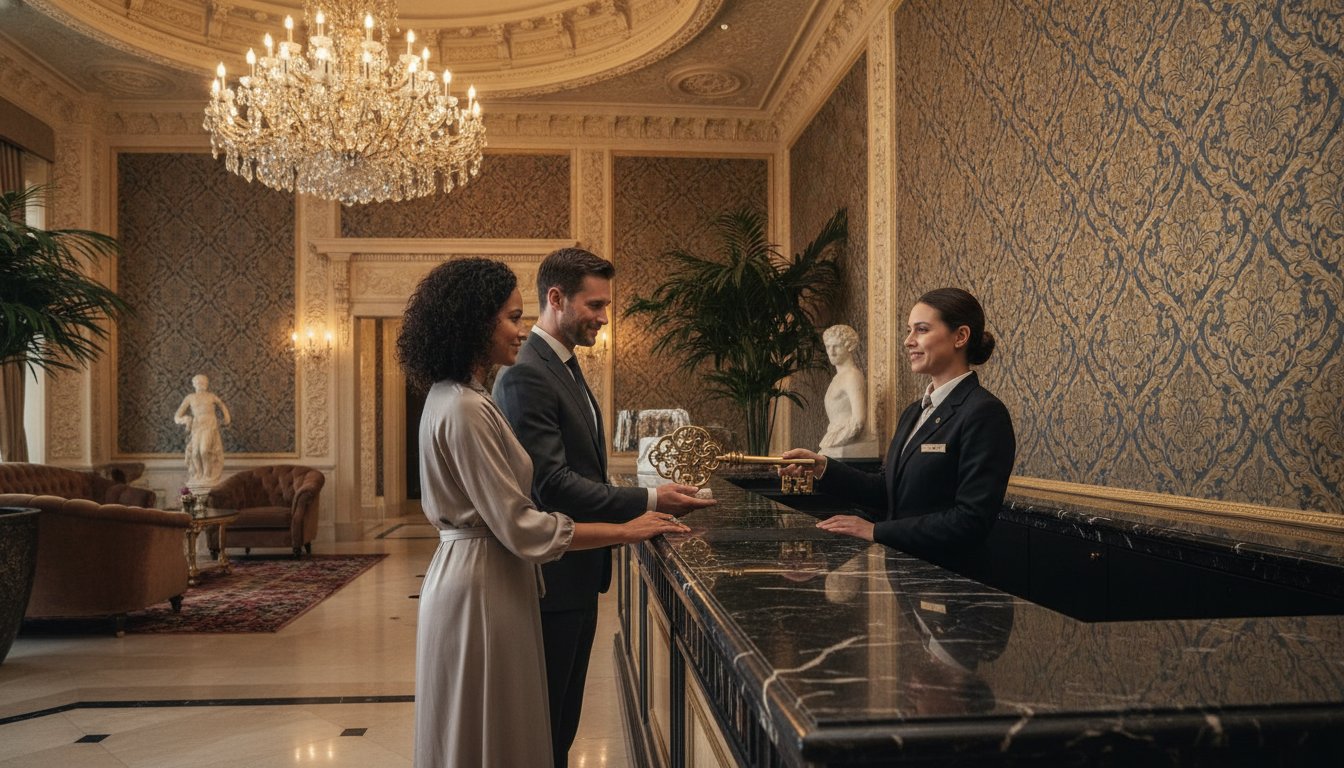
What if the pinnacle of modern luxury wasn’t defined by high-tech automation, but by the thoughtful silence of its absence? For the discerning traveler, the tension between cutting-edge innovation and sacred tradition is often felt the moment a motion sensor triggers or an electronic keycard flashes. You shouldn’t have to choose between a prestigious five-star experience and your spiritual commitments. Understanding what makes a hotel shabbat friendly is about more than just finding a room. It’s about discovering a space where ancient rituals and modern refinement are seamlessly integrated by design.
We agree that true rest should be effortless. You deserve a weekend where you never feel like a burden to staff or a stranger to your surroundings. This guide reveals the essential elements that transform a luxury property into a seamless sanctuary of sacred rest and refined tradition. We will explore the nuances of manual access, the growth of certified high-end culinary experiences, and how to navigate sophisticated environments with quiet confidence. Prepare to discover how the art of the observant stay has evolved into a masterclass of curated hospitality.
Key Takeaways
- Discover why true luxury on Shabbat is defined by the absence of digital friction and the presence of intentional, sacred rest.
- Learn exactly what makes a hotel shabbat friendly by identifying critical features like manual room access and neutralized motion sensors.
- Explore the transition from standard kosher options to curated, gourmet Shabbat feasts served with ritual prestige and dignity.
- Understand the importance of external boundaries like the Eruv and the convenience of on-site prayer services for a seamless weekend experience.
- Gain a sophisticated set of questions to vet any property’s concierge, ensuring your observant requirements are met with authority and expertise.
The Philosophy of the Shabbat-Friendly Sanctuary
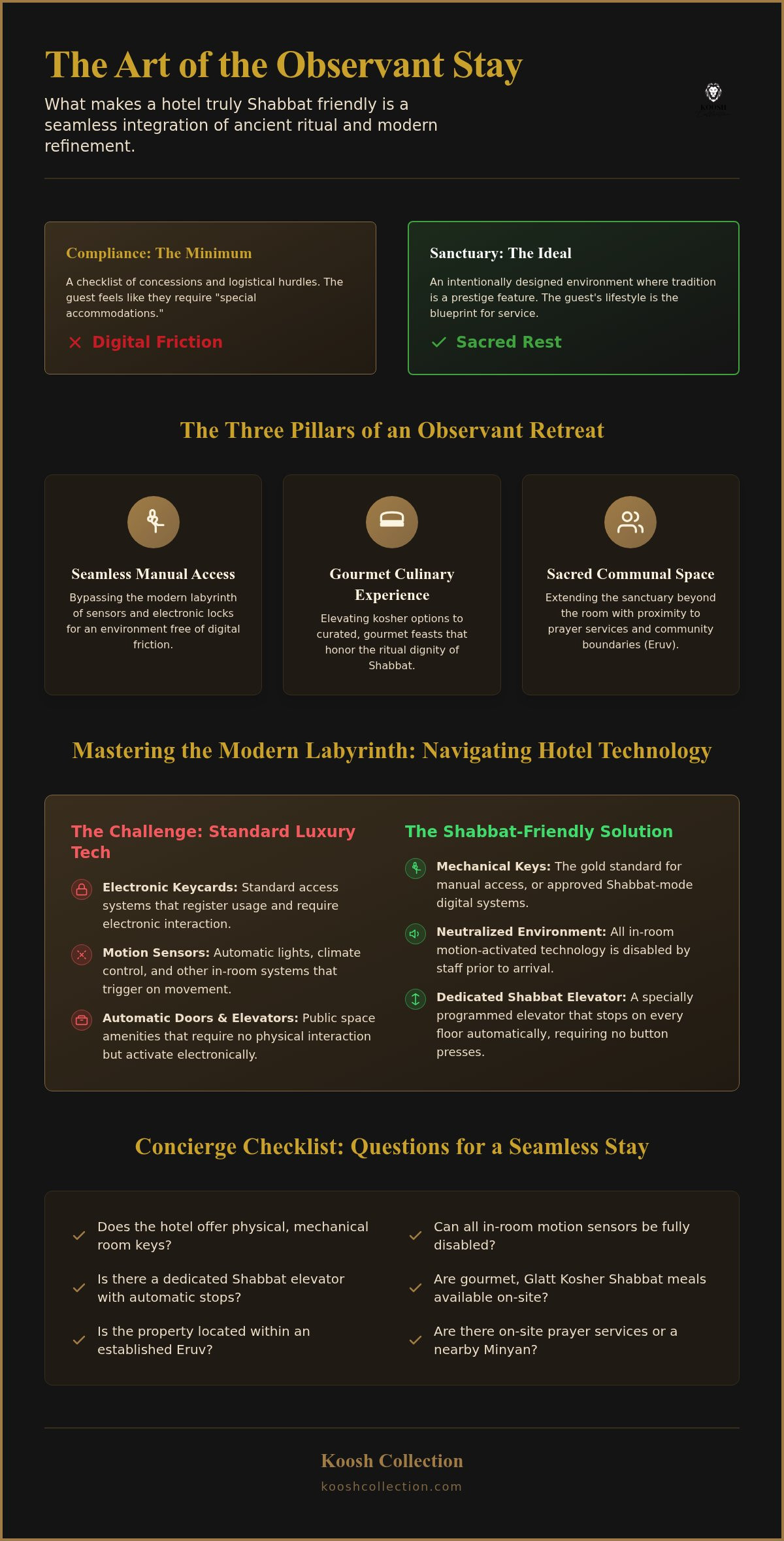
True hospitality isn’t just about providing a bed; it’s about anticipating the soul’s requirements. For the observant traveler, the difference between a compliant stay and a curated sanctuary is profound. Compliance is a list of concessions. A sanctuary is an intentional design. When we ask what makes a hotel shabbat friendly, we are looking for a property that views tradition as a prestige feature rather than a logistical hurdle. It’s the shift from being a guest who needs “special accommodations” to being a guest whose lifestyle is the blueprint for the hotel’s service model.
The mental load of the observant traveler is often heavy. Will the sensors trigger? Is the food truly Glatt? Will I feel like a burden to the staff? An enlightened host removes these questions before they are even whispered. By creating an environment where the spiritual rhythm dictates the flow of luxury, the hotel offers the ultimate modern amenity: the freedom to be fully present without a single digital distraction.
Tradition Meets Modern Refinement
Sacred rest is the ultimate luxury. In a world defined by constant connectivity, the ability to disconnect without compromise is a rare treasure. This requires a sophisticated understanding of Shabbat that goes beyond the surface. It’s about a rhythmic flow where the absence of digital friction allows for a deeper presence. A prestigious stay is defined by this intentionality. It’s the quiet confidence of knowing that every detail, from the lighting to the locks, has been curated to honor your time. Resplendent stillness shouldn’t be an accident; it should be the hallmark of the experience.
The Core Pillars of an Observant Retreat
A prestigious stay rests on three foundational pillars that support a weekend of effortless elegance. First, the infrastructure must bypass the modern labyrinth of sensors and electronic locks to provide seamless manual access. Second, the culinary experience must offer more than just a meal; it should be a gourmet feast that honors the ritual dignity of the day. Finally, the communal aspect ensures that the sanctuary extends beyond the room, providing proximity to prayer and a sense of high-status belonging. At sophisticated properties, these pillars aren’t just features. They’re the architecture of a stay where ancient tradition and modern refinement coexist in perfect harmony. This holistic approach is exactly what makes a hotel shabbat friendly at the highest level of luxury hospitality.
Mastering the Modern Labyrinth: Navigating Hotel Technology
Modern luxury is often synonymous with automation. Voice commands. Motion sensors. Touchscreens. For the observant, these are not conveniences; they are digital friction points. Understanding what makes a hotel shabbat friendly requires a deep dive into how a property manages this digital overlap. It’s about bypassing the electronic pulse of the building to maintain a sacred rhythm. When technology is thoughtfully paused, the guest is free to enjoy the resplendent stillness of the day.
The transition from digital to manual must be seamless. Mechanical keys remain the gold standard, though some elite properties now offer sophisticated Shabbat-mode digital systems that bypass electronic logging. It’s essential to consult a Traveler’s Halachic Guide to understand the nuances of these systems. Beyond the door, the elevator remains a central concern. A dedicated Shabbat elevator, programmed to stop on every floor, ensures movement through the property without the need to engage sensors or buttons.
The Architecture of the Guest Room
Within the suite, the invisible technology is the most invasive. Motion-activated lights in bathrooms or smart climate control systems can trigger with a simple movement. Elite hospitality curators ensure these are neutralized before arrival. Requesting a room on a lower floor can also provide the grace of stairwell accessibility, offering an alternative to the elevator. This level of foresight is a hallmark of prestigious accommodations designed for the observant guest. Managing these interfaces requires an enlightened host who anticipates the need for a peaceful, sensor-free environment.
Common Areas and Public Spaces
Public spaces present their own challenges. Automatic sliding doors and motion-sensor hallway lighting are standard in contemporary high-end design. A truly Shabbat-friendly property provides alternative manual entrances or ensures that staff are stationed to provide assistance without a direct request. This careful management of the modern labyrinth is exactly what makes a hotel shabbat friendly in an increasingly automated world. Maintaining a rhythmic flow through the property involves:
- Manual override options for smart-room interfaces.
- Pre-arrival disabling of motion sensors in private suites.
- Staff training to recognize and assist guests at electronic entry points.
- Clear, accessible stairwell routes for those avoiding elevators.
This level of curation ensures that tradition is treated with prestige. It allows the guest to move with confidence, knowing the environment has been adjusted to their spiritual requirements. When the digital pulse is silenced, the true art of the observant stay can begin.
The Culinary Collection: Kosher Dining and Shabbat Meals
Luxury hospitality is defined by the quality of its table. For the observant guest, the culinary experience is the cornerstone of the stay. A prestigious culinary program moves beyond simple dietary compliance to offer a masterclass in ritual dignity. It begins with the transition from the standard menu to a curated Shabbat feast. This involves pre-prepared, gourmet kosher meals that honor the sanctity of the day without sacrificing the refinement of five-star dining. Understanding what makes a hotel shabbat friendly requires looking at how these meals are staged and served.
The technical logistics are handled with invisible precision. Glatt Kosher certification represents the highest standard of culinary excellence, ensuring that every ingredient meets rigorous requirements. To maintain the warmth and texture of gourmet dishes, elite properties utilize warming trays or “blechs” in strict accordance with tradition. This allows for a seamless service where the guest never encounters the digital friction of modern kitchen appliances. It’s a sophisticated solution that preserves both the Halacha and the sensory appeal of a high-end meal.
The Art of the Shabbat Feast
A Shabbat dinner should be a multi-course experience that rivals any standard fine dining event. Imagine a table set with crisp linens and shimmering silver, where the aroma of slow-cooked delicacies fills the air. This sensory appeal is a hallmark of Koosh Collection Dining, where every meal is treated as a curated event. The focus is on resplendent stillness and high-status belonging. Each course is designed to be a discovery, blending traditional flavors with contemporary culinary techniques to create something truly extraordinary.
Beyond the Meal: Kiddush and Seudah Shlishit
The hospitality extends far beyond the main feast. A truly observant retreat provides all the necessary ritual items to ensure a frictionless weekend. This includes:
- Premium ceremonial wines and grape juice for Kiddush.
- Artisanal challah, braided and baked to perfection.
- Dedicated spaces for ceremonial candle lighting.
- A thoughtful Seudah Shlishit to conclude the day with grace.
Whether you prefer a communal Kiddush or a private moment in your suite, the host anticipates these needs. This continuous flow of hospitality ensures that from Friday sunset until the final stars appear on Saturday night, your focus remains on the spiritual rhythm of the day. This level of detail is exactly what makes a hotel shabbat friendly at the highest tier of luxury.
Ritual and Space: The Logistics of a Sacred Weekend
Beyond the mechanics of sensors and the artistry of the table lies the logistics of ritual. It’s the invisible framework that allows a family to move with grace. When considering what makes a hotel shabbat friendly, one must look at the spatial boundaries and communal connections that define the experience. A prestigious stay isn’t just a room. It’s a sanctuary within a broader sacred landscape.
The presence of a reliable Eruv is often the deciding factor for families. This carrying boundary transforms the hotel from an isolated island into a seamless extension of the home. It allows for the effortless transport of essentials. Proximity to a Minyan is equally vital. A hotel that hosts on-site services or sits within a short, prestigious walk of a synagogue understands that communal gathering is the ultimate leisure. This spatial awareness is a core part of what makes a hotel shabbat friendly.
Safety and tradition often clash in modern hospitality. An enlightened host provides dedicated, safe spaces for candle lighting, ensuring the ritual is performed with dignity rather than anxiety. Understanding the rhythm of the Jewish calendar is essential. It means the staff anticipates the early sunset of winter and the late Havdalah of summer. Every detail is timed to perfection.
The Communal Horizon
Integrating spiritual gathering with prestigious leisure requires a delicate touch. It’s about a hotel’s footprint within the local community. You can see this philosophy in action at Dolce by Wyndham Hollywood, where communal needs are met with sophisticated authority. The goal is a frictionless transition from the private suite to the public prayer space. The host acts as a knowledgeable guide to this world of curated excellence.
Private Sanctuaries for Ritual
The suite must function as a private sanctuary for study and reflection. Spacious rooms and suites are necessary to accommodate family rituals, from the Friday night Kiddush to the quietude of a Saturday afternoon. This isn’t just about square footage. It’s about the atmosphere of resplendent stillness. Every corner should invite presence. The lighting should be soft. The acoustics should be muted. It’s a space where the ancient tradition of the day finds a modern, elegant home.
Experience the pinnacle of observant hospitality by securing your stay at a property designed for sacred rest.
Selecting Your Sanctuary: The Koosh Collection Perspective
The final selection of a retreat is a moment of curation. It requires a discerning eye and a sophisticated list of inquiries. To truly understand what makes a hotel shabbat friendly, one must look beyond the glossy brochure and speak to the heart of the operation. The concierge should possess an authoritative understanding of your ritual needs. If the staff hesitates to explain sensor overrides or the logistics of manual entry, the sanctuary is incomplete. A standard hotel sees these as requests; a sanctuary sees them as requirements.
A curated collection offers an experience that a standard hotel cannot replicate. It provides a world where tradition is treated with prestige. In this environment, you are not a guest with “special requests.” You are a guest whose lifestyle is the inspiration for the hospitality itself. This shift in perspective is the hallmark of elite observant travel. It transforms a simple weekend into a frictionless masterclass in refined living. Before you book, consider these essential questions for the hotel concierge:
- Are the motion sensors in the private suites fully neutralizable before arrival?
- Is there a dedicated Shabbat mode for the elevator or clear, safe stairwell access?
- Can you confirm the specific Glatt Kosher certification body for the culinary program?
- Does the property sit within a reliable, local Eruv boundary?
A Masterclass in Observant Hospitality
High-status belonging is the ultimate luxury. It’s the feeling of being understood without speaking. At its core, the Koosh Collection acts as a knowledgeable guide to a world where ancient ritual and modern elegance coexist. This is not about simple compliance. It is about a sophisticated understanding of Jewish traditions. To begin your journey toward a frictionless weekend, explore exclusive promotions designed for the observant traveler. The goal is resplendent stillness. Every detail is carefully selected to ensure your focus remains on the sacred.
The Future of Shabbat-Friendly Travel
The evolution of luxury stays is moving toward a global observant community that refuses to compromise. Discovery and devotion are no longer at odds. The future belongs to properties that can silence the digital pulse of the building to allow the spiritual rhythm to take center stage. This union of high-end living and strict observance is what makes a hotel shabbat friendly in the modern era. It is an art form. It is a commitment to excellence. To deepen your understanding of these standards, read more about Defining Excellence: The Ultimate Guide to the Luxury Kosher Hotel in Florida.
Embracing the Future of Sacred Discovery
The evolution of high-end travel has arrived at a beautiful intersection. We’ve explored how the union of technology and tradition defines the modern observant stay. From neutralizing smart-room sensors to curating multi-course Glatt Kosher feasts, every detail serves a higher purpose. Understanding what makes a hotel shabbat friendly is finally about more than simple compliance; it’s about prestige. It’s the quiet confidence of knowing your spiritual rhythm is the hotel’s primary blueprint. True hospitality should never require you to compromise your convictions for comfort.
You deserve a weekend where resplendent stillness is the only standard. Our collection offers prestigious sanctuaries designed specifically for the discerning traveler. With expertise in friction-free technology and ritual elegance, we invite you to rediscover the art of the observant stay. Experience the pinnacle of observant luxury with Koosh Collection and step into a world where your devotion is honored with unparalleled refinement. Your next sanctuary is waiting.
Frequently Asked Questions
What is the difference between a Shabbat-compliant and a Shabbat-friendly hotel?
A Shabbat-compliant hotel meets the baseline halachic requirements by offering the bare essentials for observance. In contrast, what makes a hotel shabbat friendly is the elevation of these rules into a luxury experience. It’s the difference between a mechanical key and an enlightened host who anticipates your needs. True friendliness ensures that tradition feels like a prestige feature rather than a logistical hurdle to be cleared.
How do hotels handle electronic key cards on Shabbat?
Elite properties provide mechanical keys or sophisticated Shabbat-mode digital systems to bypass electronic logging. This ensures you can access your suite without violating tradition. Some hotels station staff at entry points to assist guests discreetly. It’s vital to confirm these arrangements with the concierge before your arrival. A frictionless entry is the hallmark of a property designed for the observant elite who value both privacy and halachic integrity.
Can I light Shabbat candles in my hotel room?
Most luxury hotels prohibit open flames in guest rooms due to strict fire safety regulations. To honor this ritual, sophisticated properties provide dedicated, safe communal areas for candle lighting. These spaces are often elegantly appointed to maintain the dignity of the moment. Alternatively, some travelers utilize electric candles designed specifically for this purpose. Always consult with the hotel’s enlightened host to discover the specific arrangements available for your stay.
Are there specific hotel chains that are more Shabbat friendly?
No single global chain is universally observant. Instead, the focus should be on individual properties or curated collections that specialize in this niche. Prestigious boutique hotels often provide a more tailored experience than mass-market brands. These properties invest in staff training and specialized infrastructure. Searching for a curator who understands the nuances of Jewish tradition is the most reliable way to ensure a seamless and high-status weekend retreat.
How do I ensure my meals are truly Glatt Kosher while traveling?
You should verify the specific certification from recognized bodies like OU or OK Kosher. A truly Shabbat-friendly property will provide clear documentation of their Glatt Kosher status. Many elite hotels partner with external caterers or maintain on-site kitchens under strict rabbinical supervision. This ensures every gourmet course meets the highest standards of culinary excellence. Confirming these details with the concierge before booking provides the confidence needed for a refined dining experience.
What should I do if my hotel room has motion-sensor lights?
You must request that the hotel staff disable or neutralize motion sensors in your suite before you check in. This is a critical component of what makes a hotel shabbat friendly in the modern era. Many high-end properties are familiar with these requirements and can adjust the smart-room interfaces accordingly. If neutralization isn’t possible, some guests use low-tech solutions like tape, but a prestigious hotel will handle this for you invisibly.
Is it possible to find a luxury hotel with a Shabbat elevator?
Yes, many premier hotels in major metropolitan areas feature dedicated Shabbat elevators. These are programmed to stop automatically on every floor, removing the need to engage any electronic buttons. This feature is essential for those staying in high-rise properties. If an elevator isn’t available, an enlightened host will ensure your room is located on a lower floor with easy stairwell access. This foresight ensures a rhythmic flow through the property.
How do I find out if a hotel is within a local Eruv?
You can consult the “Find a Chabad” directory or contact the local rabbinical council to verify the current status of an Eruv. These boundaries can change, so real-time verification is essential for family comfort. A sophisticated hotel concierge will also possess this information and can explain how the property sits within the local ritual landscape. This knowledge allows you to carry essentials with grace, ensuring a frictionless transition between public and private spaces.