
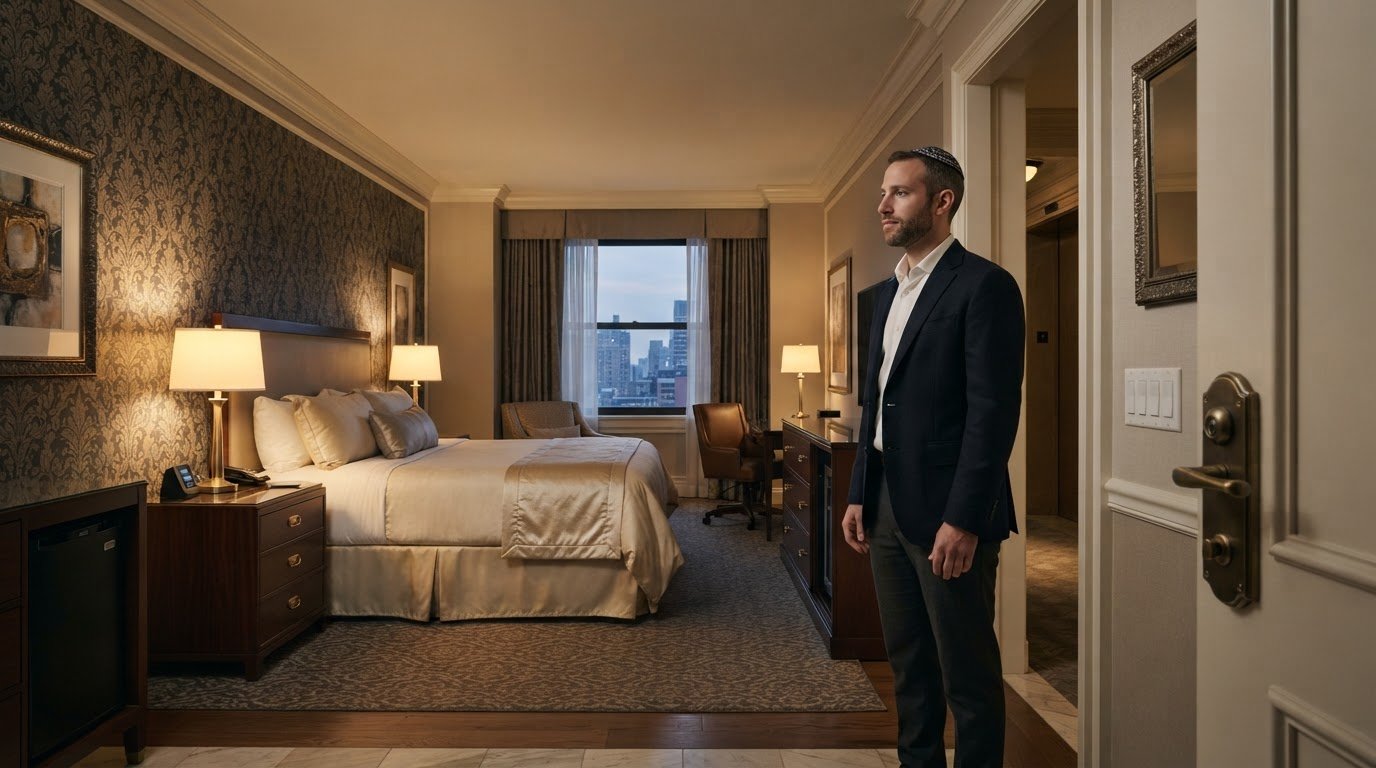
A hotel’s Shabbat-friendly label can’t tell you what happens when you reach for the light switch. A shabbat friendly hotel room tour looks beyond polished photos to the everyday details that shape your stay: room lighting, door access, controls, and the route to your floor.
Kosher dining or a welcoming description can be useful when choosing a hotel, but neither confirms how a particular room works. Arrangements may differ by property, room, and personal observance, so it’s worth checking the details that matter to you before you reserve.
This guide walks through the room from an observant traveler’s perspective. Use it to identify what to inspect, what to ask about, and how to compare the answers with your own needs. From locks and lighting to elevators and requested accommodations, specific questions can help you understand what’s confirmed for your stay.
Key Takeaways
- A shabbat friendly hotel room tour focuses on practical room details, not just the property’s general description.
- Separate what you can observe from what staff need to confirm about access, lighting, and controls.
- Compare room arrangements with your priorities, including layout and food-storage needs.
- Prepare specific questions, record the answers, and reconfirm arrangements for your dates before booking.
- Use hotel information as a starting point, then verify how it applies to the room option you’re considering.
What a Shabbat-Friendly Hotel Room Tour Should Help You Discover
A hotel’s general description can set expectations, but it doesn’t confirm how a particular room works. A shabbat friendly hotel room tour is a practical walkthrough of room access, lighting, controls, and guest arrangements. It helps you identify what may suit your needs and what still requires a direct answer.
Think beyond how the room looks. Consider the actions you may take from arrival to departure: entering the room, moving between spaces, adjusting the temperature, using the bathroom, and reaching shared facilities. Some details are visible during a tour. Others depend on how a system operates or what the property can arrange for your dates.
What makes a room tour useful for Shabbat planning?
A useful tour connects each feature to your own plans. You might note where a switch is positioned, then ask how the lighting works. You might see the room entrance, but still need to confirm how access is managed. The rules around electricity on Shabbat involve differing perspectives, so discuss your requirements with your household or trusted religious guidance rather than assuming one setup works for everyone.
Keep two kinds of information separate:
- Visible features: room layout, switch locations, and the apparent placement of controls.
- Details to coordinate: how systems operate, what access arrangements may be possible, and whether a requested accommodation applies to your stay.
Which details can photos show, and which need confirmation?
Photos can help you assess whether the layout seems practical, where bedside lighting appears to be, and where controls are positioned. They offer a useful first look, not a complete account of how the room functions.
An image can’t establish whether a lock is electronic, whether lighting or climate controls respond to sensors, or how automated systems behave. Treat these as questions, not assumptions. Ask the property how relevant features operate and whether requested access arrangements or accommodations are available for your specific room and dates. A photo of a switch, for example, doesn’t show what activates the light or whether its operation can be adjusted.
Use the tour to build a clear picture, then compare it with your own observance. The right fit is personal, so focus on the details you’ve confirmed.
Walk Through the Room: Access, Lighting, and Controls to Check
Move through the room in the order you’ll encounter it. At each point, note what you can see and ask staff about anything that depends on how a system operates. A shabbat friendly hotel room tour should leave you with clear answers, not assumptions.
How should guests check room entry and building access?
Start at the entrance. Look at the door and how it opens, then ask whether room entry relies on an electronic card, a sensor, or another system. Don’t assume an alternative key or access arrangement is available. Confirm directly what options, if any, can be arranged for your room and dates.
Consider the route beyond the room, too. Ask how elevators and shared entrances operate, and whether arrangements relevant to your observance are available. The appearance of a lift or reader won’t tell you how it functions. Ask the property for a specific answer rather than relying on a general description.
What should the lighting and climate walkthrough cover?
Once inside, locate the main-room switches, bedside lights, and bathroom controls. Check where they are in relation to the bed and the path through the room. Then ask whether lights turn on through motion sensors, follow automatic schedules, or use another control method. A visible switch doesn’t confirm how the light behaves.
Next, find the thermostat or other climate controls. Ask whether heating or cooling responds to sensors or changes automatically, and what settings or alternatives may be available. Don’t infer operating modes from a control panel or photograph. The property needs to explain how the system works and whether a requested arrangement can be made.
Continue into the bathroom and sleeping area. Note the location of the bathroom light control and any controls near the bed, and consider how easily you can move between these spaces. For each feature, distinguish what you can inspect from what staff must verify.
Checklist: Verify the room door and building access, elevator arrangements, main and bedside lights, bathroom switches, climate controls, sensors, and any automated settings.
Keep a short list of unanswered questions as you tour. If you’re exploring Dolce by Wyndham hotel details, use them as a starting point, then confirm how access, lighting, and controls apply to the specific room you’re considering.
Compare Shabbat-Friendly Room Setups Against Your Own Needs
A room’s suitability depends on the details that matter to you, not a single label. Use your shabbat friendly hotel room tour notes to compare each option with your household’s priorities. Mark which answers are confirmed and which details still need checking.
Which room details matter most for different travelers?
Families may prioritize layout and sleeping arrangements, while a solo traveler or couple may focus first on room access, lighting, or controls. Food-storage needs can also shape your questions, but don’t assume a room includes a particular appliance or setup. Ask what applies to the specific room category and dates you’re considering.
Before comparing options, rank your requirements as essential, preferred, or flexible. This helps you identify a genuine fit rather than be swayed by features that don’t address your needs. Review the available room information as a starting point, then confirm room-specific details directly.
| Guest need | Question to ask | Answer to verify |
|---|---|---|
| Room and building access | How does room entry work, and what elevator or shared-entry arrangements apply? | The access method and any arrangement available for your dates and room. |
| Lighting and controls | How are the main, bedside, and bathroom lights operated? Do any use sensors or automatic settings? | How each relevant control works and whether an alternative is available. |
| Room layout | What sleeping arrangement and layout apply to this room option? | The specific configuration, rather than an assumption based on a general photo. |
| Food storage | What food-storage facilities, if any, are included in this room? | The current facilities and whether they meet your practical needs. |
How do room arrangements differ from kosher dining?
Kosher dining and Shabbat-friendly room arrangements are related parts of trip planning, but they answer different questions. Food supervision and meal service concern dining. Access, lighting, controls, layout, and storage concern the room. Information about one doesn’t confirm the other.
For dining details, consult the property’s dining information, then verify questions about supervision, meal availability, or service directly. Keep a separate list of room questions and confirm the answers for your dates. This makes it easier to see which details are settled and which still need attention.
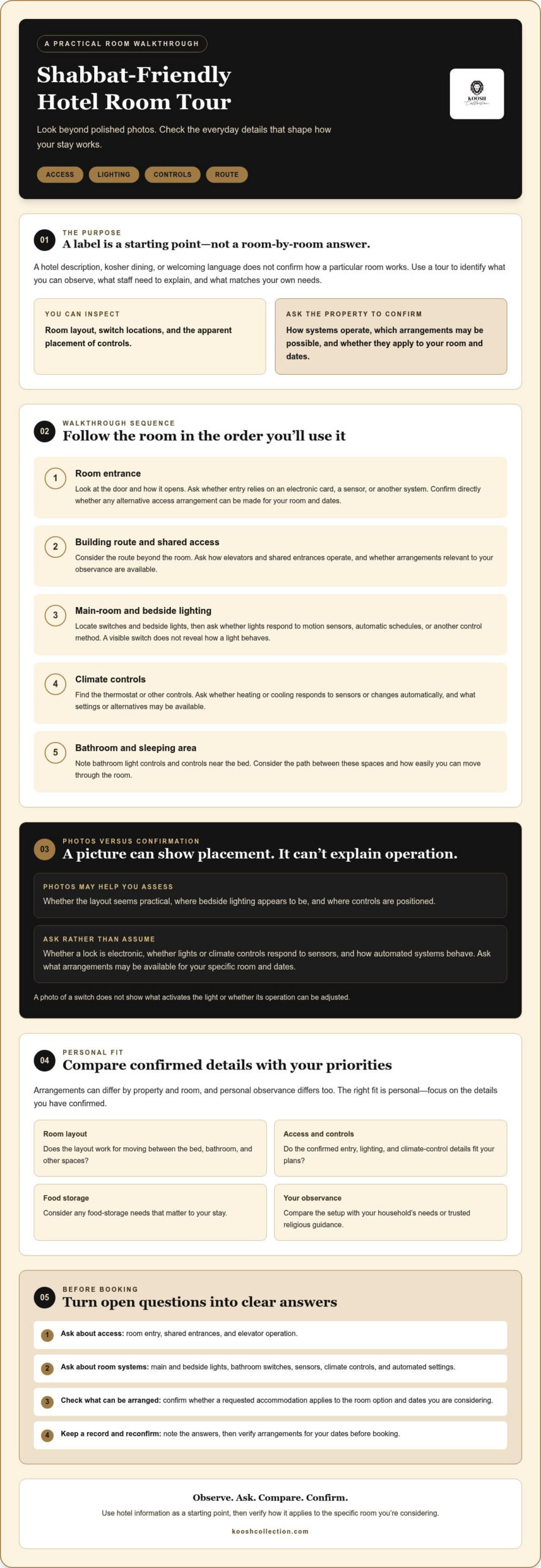
Questions to Ask Before Booking a Shabbat-Friendly Hotel Room
Before reserving, turn your priorities into questions the property can answer clearly. A shabbat friendly hotel room tour is most useful when it leads to current details about the room and shared facilities, not reassurance based on a broad label or an old review.
Use this simple sequence:
- 1. List your needs. Note which room features and access arrangements are essential for your household, and which would simply be helpful.
- 2. Contact the property. Ask what arrangements are available for your intended stay dates and the room option you’re considering.
- 3. Record each answer. Write down what was confirmed, what remains unclear, and whom you spoke with. Ask for written confirmation when useful.
- 4. Reconfirm before arrival. Check that the arrangements still apply to your dates and room, especially if any details were tentative.
What should you ask the hotel team directly?
Be precise. Ask how room entry works, whether access depends on an electronic card or sensor, and what alternatives, if any, may be available. Clarify how lights and climate controls operate, including whether they involve sensors or automatic settings. Ask about elevator access and any shared spaces that matter to your plans.
Then establish the scope of each answer: “Does this apply to the room category I’m considering, and is it available on my dates?” If a response is uncertain, ask whom to contact for clarification or written confirmation. Don’t treat a general statement about Shabbat-friendly hospitality as confirmation of a particular room feature.
How can you prepare for a more reliable room tour?
Bring a short checklist based on your household’s needs and observance practices. If the property can provide a live walkthrough or current photographs, use them to understand the room’s layout and locate relevant features. Visuals can guide your questions, but they won’t establish how a system operates or whether an arrangement is available.
Keep unresolved items visible in your notes. Before booking, make sure you know which details are confirmed, which are unavailable, and which still need follow-up. Recheck arrangements tied to particular dates or a specific room option rather than relying on past guest reports.
Ready to review the property as you prepare your questions? Explore the hotel and confirm your room needs directly with the property.
Explore Dolce by Wyndham and Plan Your Room Tour
This destination is an option to explore as you plan a stay, but a property overview can’t confirm how a particular room will work for Shabbat. Treat published information as a starting point. Your shabbat friendly hotel room tour should help you compare what’s described with the details confirmed for your room and dates.
What can you confirm before choosing a room?
Begin with the hotel details through Koosh Collection. Review the published room descriptions and note anything relevant to your priorities, such as layout or sleeping arrangements. Compare those descriptions with the questions you’ve already identified. If a detail isn’t stated, treat it as unconfirmed rather than assuming it applies.
You can also review the property’s published hotel amenities. These details may help you understand the broader stay, but an amenity listing doesn’t establish whether a feature is suitable for Shabbat or available with a particular room. Ask the property how each relevant arrangement works and whether it can be confirmed for your intended dates.
Keep a simple record with three categories: confirmed, not available, and awaiting an answer. This makes it easier to spot gaps before you book and prevents a general description from being mistaken for a room-specific commitment.
How can a room tour support a confident decision?
A room tour brings the decision back to fit: does the room match your practical priorities, are the arrangements you need confirmed, and are any remaining questions acceptable to you? Share a concise checklist with the hotel team, including the room option and dates you’re considering. Ask them to address each relevant point directly.
If a response is unclear, request clarification before making plans. Room layouts, access, lighting, controls, and related arrangements may depend on the specific room or stay dates, so confirm the details rather than relying only on published descriptions or previous guest accounts.
Explore the stay and ask the property about current arrangements before booking. Explore the hotel stay with Koosh Collection as you prepare your questions and consider whether the available information fits your needs.
Make Your Next Stay a More Informed Choice
A thoughtful shabbat friendly hotel room tour is about more than what a room looks like. It helps you check how access, lighting, controls, and layout align with your needs, then separate what you can observe from what the property must confirm. Arrangements may vary by room and stay dates, so ask direct questions and keep a record of the answers before booking.
Koosh Collection focuses on luxury hospitality with kosher-friendly and Shabbat-friendly guest experiences. A general description is a useful starting point, not confirmation of specific room arrangements. Verify the details that matter to you directly for your requested dates.
Ready to take the next step? Explore the hotel and ask about your room needs. Use the property’s answers to decide whether the available arrangements fit your plans.
Frequently Asked Questions
What makes a hotel room Shabbat-friendly?
A hotel room may be considered Shabbat-friendly when its access, lighting, controls, and related arrangements align with a guest’s observance needs. There isn’t one setup that suits everyone. Room entry could involve an electronic key, while lighting or climate systems may have automatic features. Ask the property how the specific room operates and what arrangements are available for your dates, then compare the answers with your own needs or trusted religious guidance.
How can I check whether a hotel room is suitable for Shabbat?
Ask the property direct, room-specific questions before booking. Clarify how you enter the room, operate its lights and climate controls, and access relevant shared facilities such as elevators. A shabbat friendly hotel room tour can help you identify visible details, but photos and general descriptions can’t confirm how systems function or whether arrangements are available. Record what’s confirmed, what’s uncertain, and whether the answers apply to your intended room and dates.
Do Shabbat-friendly hotels always have a Shabbat elevator?
No, don’t assume a hotel has a Shabbat elevator because it describes its hospitality as Shabbat-friendly. Elevator arrangements can vary by property and may need to be confirmed for your intended stay. Ask whether an elevator with automatic stops is available, which floors it serves, and whether it will operate during the times relevant to your plans. Confirm the answer directly with the property rather than relying on an old review or a general label.
Can I use electronic room keys on Shabbat?
Whether an electronic key is appropriate depends on the guest’s observance and religious guidance. Before booking, ask how room entry works and whether another access arrangement is available for your room and dates. Don’t assume a manual key or staff-assisted entry can be provided. If you have questions about what’s appropriate for your practice, consult a trusted religious authority and explain the hotel’s specific access system.
What should I ask a hotel before booking a Shabbat-friendly room?
Ask how room entry works, whether lighting or climate controls use sensors or automatic settings, and what elevator or shared-facility arrangements apply. Clarify whether each requested arrangement is available for your specific room and intended dates. If an answer is uncertain, ask whom to contact for follow-up and whether the details can be confirmed in writing. Keep notes so you can distinguish confirmed information from questions that still need an answer.
Is kosher room service the same as a Shabbat-friendly hotel room?
No. Kosher dining and Shabbat-friendly room arrangements are separate considerations. Dining information may address food supervision or meal service, but it doesn’t confirm how room access, lights, controls, or shared facilities work. Ask separate questions about each. If kosher dining matters to your stay, verify the relevant details with the property, then confirm room arrangements independently for your room and dates.
Can I request a Shabbat-friendly room after booking?
You can contact the property after booking to ask about relevant arrangements, but don’t assume they’ll be available. Room options and arrangements may depend on your dates and the specific room. Share your needs clearly, ask which requests can be confirmed, and request clarification about anything unresolved. Contacting the property before arrival gives you time to understand the answers, but it doesn’t guarantee a particular arrangement.