
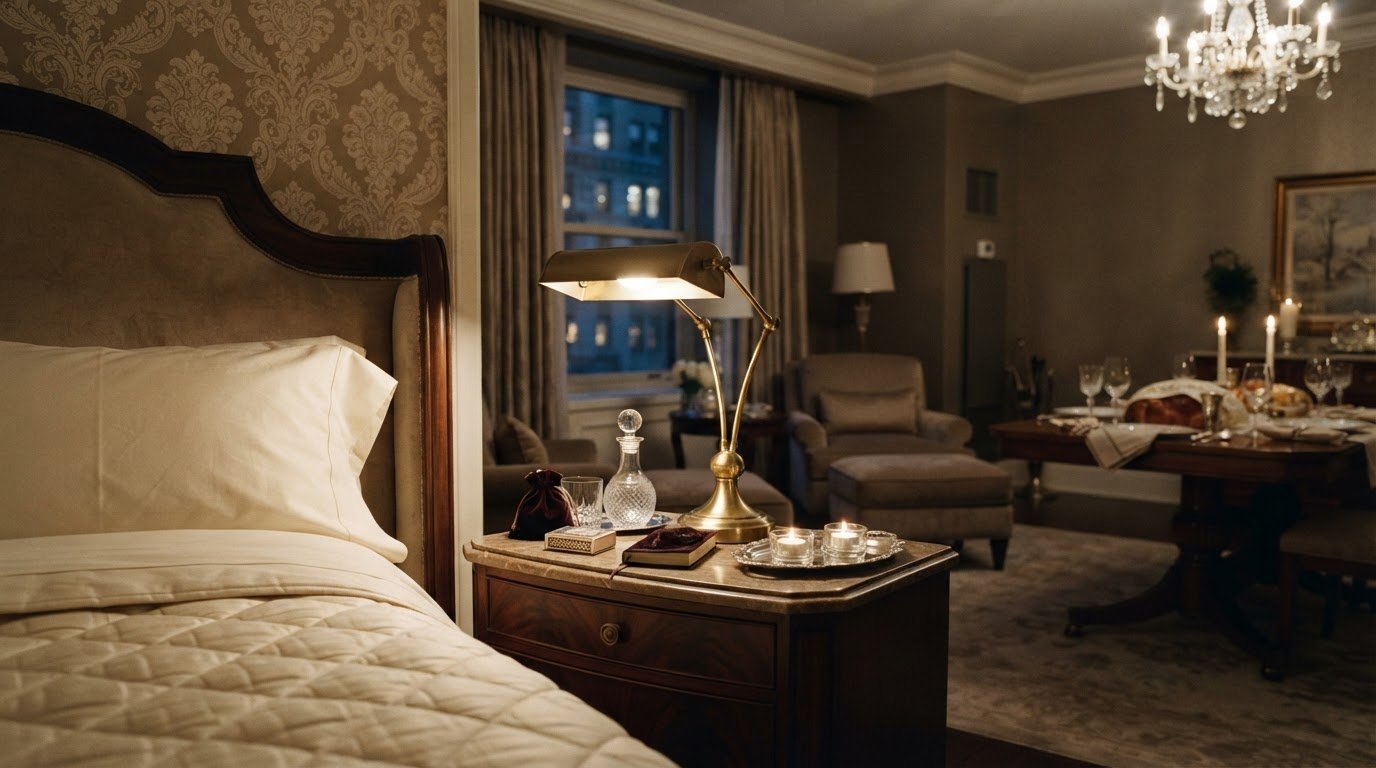
A Shabbat-ready stay is shaped by room-level details, not labels alone. Finding a luxury hotel with in-room shabbat lamps means understanding how the light is controlled and whether the room’s wider comforts suit your observance. A Shabbat lamp generally stays on throughout Shabbat, while a cover or shutter lets you adjust the light without using its electrical switch. Knowing how the lamp works helps you assess whether its setup suits your needs.
It’s reasonable to want both ease of observance and the quiet refinement of a luxury stay. Koosh Collection provides upscale accommodations with kosher-friendly and Shabbat-friendly hospitality across its featured properties. To compare your options thoughtfully, look beyond broad descriptions and consider how the room’s lighting and layout fit your plans.
This guide explains the practical role of a Shabbat lamp and offers a clear framework for comparing room details with the wider hotel experience. You’ll learn how to assess lamp controls, placement, brightness, and ease of use, then weigh those details alongside comfort and hospitality.
Key Takeaways
- Understand how a Shabbat lamp’s controlled illumination can support a more restful room setup.
- Compare lamp control, placement, brightness, and ease of use against your own needs.
- A “Shabbat-friendly” description refers to broader hospitality, while a lamp’s design and placement are room-level details.
- Assess room lighting, dining context, comfort, and wider hospitality as separate parts of your stay.
- Use a practical planning framework to choose a luxury hotel with in-room shabbat lamps that fits your observance and comfort priorities.
What Does an In-Room Shabbat Lamp Do in a Luxury Hotel?
How can room lighting support a restful Shabbat while still feeling comfortable and familiar? For an observant traveler, the answer depends on more than a hotel’s general approach to Shabbat-friendly hospitality. The lamp’s design, position in the room, and method of adjusting its light all shape how useful it is for your stay.
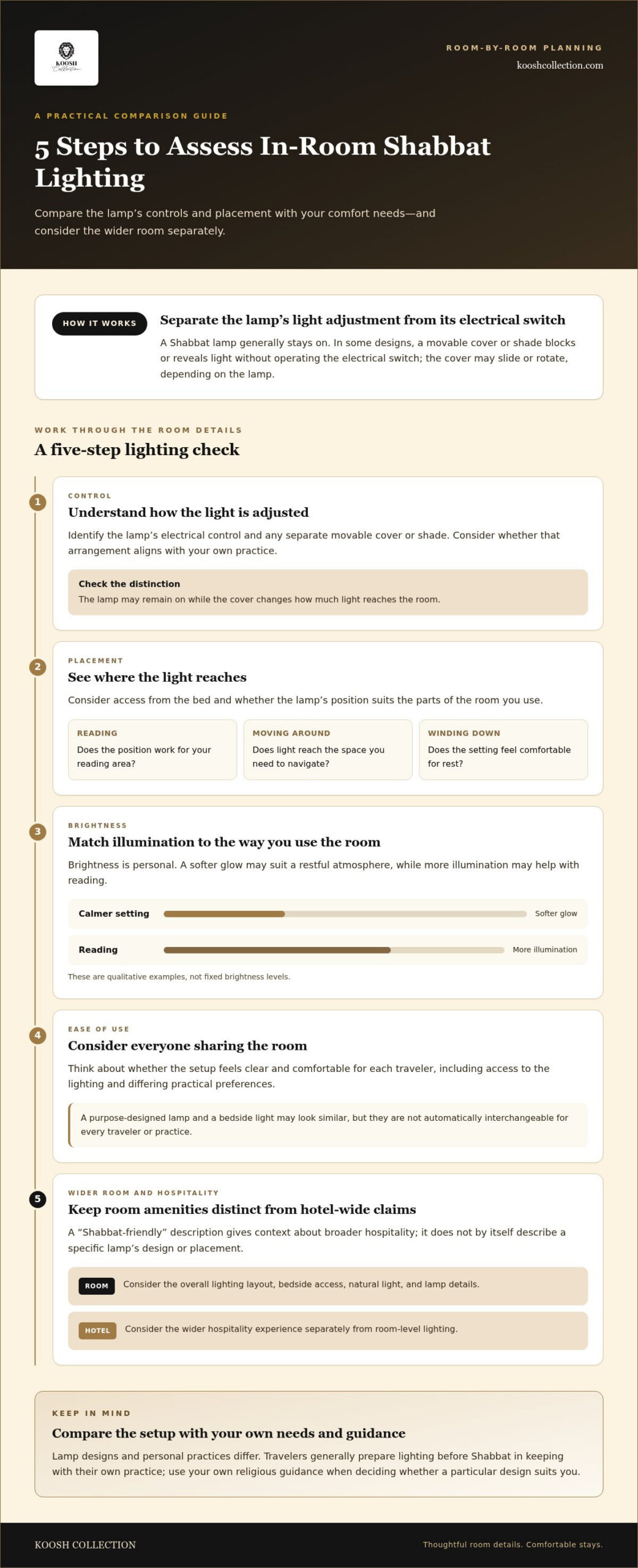
A Shabbat lamp is designed to provide illumination that can be adjusted without operating its electrical switch. Some designs use a movable cover or shade to block or reveal light while the lamp remains on. The Shabbat lamp entry explains this general mechanism. Designs and personal practices differ, so consider the specific lamp and your own needs.
How does a Shabbat lamp work?
In designs with a movable cover, the shade changes how much light reaches the room. Depending on the lamp, the cover may slide or rotate. The electrical control and the light-adjusting mechanism serve different roles, and not every lamp uses the same arrangement. Travelers generally prepare the lighting before Shabbat in keeping with their own practice. Use your own religious guidance when deciding whether a particular design suits you.
Why does room-level lighting matter to an observant traveler?
Predictable lighting can make a guest room feel more settled. A suitable level of illumination can support reading, moving around, or winding down, while other room lights may have separate controls and functions. In a luxury stay, comfort depends on how the space works as well as how it looks.
A description such as “Shabbat-friendly” gives context about a hotel’s broader hospitality. The lamp’s controls, placement, and brightness are separate room-level considerations. One traveler may prioritize adjustable light near a reading area, while another may focus on a calmer setting for rest. Religious decisions about lighting and room use belong with each traveler’s own guidance.
When considering a luxury hotel with in-room shabbat lamps, assess the lamp and the wider Shabbat-friendly experience as related but distinct parts of your stay. This keeps the decision focused on practical comfort without assuming that one lamp, layout, or practice suits everyone.
Which In-Room Shabbat Lamp Details Should You Compare?
A useful comparison goes beyond whether a room mentions a lamp. Consider how the light is controlled, where the lamp sits, whether its brightness suits your needs, and how straightforward the arrangement is to use. These details help you evaluate the fixture as part of the room, alongside the hotel’s wider approach to hospitality.
A useful lamp setup depends on both the device and its placement. A purpose-designed lamp and a bedside light may look similar, but they aren’t automatically interchangeable for every traveler or practice. Consider the whole room, not just the fixture.
How should you assess a lamp’s controls and placement?
Consider whether the lamp’s control or movable cover fits the setup you intend to use, and whether its position works for reading, moving around, and winding down. Brightness is personal: a softer glow may suit a restful atmosphere, while more illumination may help with reading. Use these points to compare the room with your preferences and practice.
- Control: Identify how the light is adjusted and whether that arrangement aligns with your practice.
- Placement: Consider access from the bed and how the light reaches the parts of the room you use.
- Brightness: Think about the balance between practical visibility and a calm atmosphere.
- Ease of use: Consider whether the setup feels clear and comfortable for everyone sharing the room.
What room details shape a comfortable Shabbat setup?
Lighting doesn’t exist in isolation. The room’s overall lighting layout, bedside access, and natural light all influence how comfortable the space feels. If you’re sharing the room, include each traveler’s practical preferences in your planning. Koosh Collection’s guest room overview offers a broader look at its accommodations, while your own priorities can guide which room details matter most.
| Personal need | Room detail to consider | Why it matters |
|---|---|---|
| Reading comfortably | Lamp position and usable brightness | Helps you judge whether the light suits your routine. |
| A restful atmosphere | How light reaches the bed and surrounding space | Supports a setting that feels calm rather than overly bright. |
| Sharing the room | Access to lighting and preferences of both travelers | Helps the arrangement feel practical for everyone. |
When comparing a luxury hotel with in-room shabbat lamps, weigh room-specific lighting alongside the hotel’s overall hospitality. To explore Koosh Collection’s featured property, view the featured hotel accommodations.
How Do You Compare Shabbat-Friendly Hotel Claims with Room Needs?
A “Shabbat-friendly” description offers context about a hotel’s broader hospitality. Room lighting, including a lamp’s design and position, is a separate consideration. Compare the room details with what matters to your stay, then weigh those alongside the wider guest experience.
Does Shabbat-friendly automatically mean a lamp is in the room?
A general hospitality description and a named room amenity are different kinds of information. When comparing accommodations, look at the room details separately from the hotel’s broader Shabbat-friendly approach. Koosh Collection provides upscale accommodations with kosher-friendly and Shabbat-friendly hospitality. Consider the room’s lighting and layout alongside that wider experience, and use your own religious guidance to assess what suits your practice.
How should you weigh the room against the overall hotel experience?
Start with your personal requirements, then consider the hotel experience around them. Room lighting may be central for one traveler, while dining context, comfort, or other amenities may also shape the stay. Assess each factor on its own terms. Use your own religious guidance for decisions about observance.
| Stated feature | Personal requirement | Why it matters |
|---|---|---|
| A Shabbat lamp described for the room | A particular way to manage room lighting | Connects a named room detail with a specific practical need. |
| General Shabbat-friendly hospitality | A stay that feels welcoming and considered | Provides broader context for the overall guest experience. |
| Dining information | Food arrangements that suit your plans | Helps you evaluate dining separately from lighting and room comfort. |
| Hotel amenities and room comforts | A comfortable, convenient stay | Shows how the wider experience complements your room priorities. |
This comparison keeps the decision balanced. A room feature may address a practical need, while the hotel’s broader hospitality, dining context, and comfort contribute to the character of the visit. Koosh Collection’s hotel amenities overview offers a wider view of the guest experience.
For anyone considering a luxury hotel with in-room shabbat lamps, the right fit comes from weighing room priorities alongside the comfort and hospitality you want. Explore the featured Koosh Collection property.
How Can You Plan a Comfortable Hotel Stay Around Shabbat?
A considered stay begins with your needs, not a generic amenity list. Decide which room details are essential, review the accommodation information, then shape your plans around your own observance. This sequence keeps practical requirements clear while leaving room for comfort and the pleasures of a refined hotel experience.
What should you decide before selecting a room?
Separate must-haves from features that would simply make the stay more comfortable. Think through how you use light, how easily you need to move through the room, and whether anyone sharing the space has different preferences. The layout matters too. A room can look inviting yet feel less practical if its lighting or arrangement doesn’t suit your routine.
- Lighting: Note your preferred level of illumination and any specific lamp arrangement relevant to your practice.
- Mobility: Consider how you’ll move comfortably around the room and access the areas you use.
- Shared space: Include the needs and preferences of everyone staying with you.
- Room priorities: Mark which details are essential and which would simply enhance comfort.
How can you make the stay feel seamless?
Once your room priorities are clear, consider the rhythm of the stay. Think about arrival, time to settle in, rest, and the routines you want the room to support. Include dining and broader property amenities as distinct parts of the experience. For religious decisions about lighting and room use, follow the guidance you rely on personally rather than treating general travel advice as a ruling.
Before reserving, name your needs, review the room details, then plan the stay around your own practice. This sequence can help you weigh practical considerations without losing sight of comfort. It’s especially useful when comparing a luxury hotel with in-room shabbat lamps, since a polished stay should feel supportive in the details as well as in the wider experience.
Koosh Collection brings an upscale sensibility to kosher-friendly and Shabbat-friendly hospitality, with Dolce by Wyndham as a featured property. Explore the featured hotel accommodations as you plan a stay around your priorities.
Choosing a Luxury Hotel Stay That Respects Your Shabbat Priorities
A thoughtful hotel choice brings together the details of the room and the character of the wider stay. Consider four things side by side: room lighting, your individual practice, personal comfort, and hospitality beyond your door. No single amenity defines religious suitability, and a general description can’t replace your own priorities or guidance.
What makes a luxury stay feel genuinely considered?
Luxury is more than an elegant room. It’s the ease of settling in, the comfort of the space, and the sense that different traveler needs matter. For an observant guest, room lighting may be one part of that picture, alongside dining context and the broader hospitality experience.
Koosh Collection focuses on upscale accommodations and offers kosher-friendly and Shabbat-friendly hospitality. Consider that context as you weigh the overall stay, alongside practical room details such as lighting and layout. Broad hospitality describes the experience; room details describe the space you’ll use.
How can you make your final hotel decision?
Return to your personal checklist before settling on a property. Separate essential needs from features that would simply add comfort, then compare those priorities with the property information. Consider whether the room’s lighting and layout fit your plans, and whether the wider hotel experience feels right for your stay. For decisions about religious practice, rely on the guidance you follow personally.
A luxury hotel with in-room shabbat lamps is a useful search starting point, but the best fit comes from weighing room information alongside individual practice and the broader experience. Koosh Collection offers an upscale approach to Shabbat-friendly hospitality, bringing observance and comfort into the same conversation.
Explore the featured hotel details for a closer look at the stay. A little attention to your priorities can make the choice feel more assured and the experience more considered.
Choose a Stay That Feels Right for Your Shabbat
A comfortable Shabbat stay starts with clarity. Consider how a lamp is controlled and positioned, distinguish room-specific details from broader Shabbat-friendly hospitality, and weigh lighting alongside your personal practice, comfort, and the wider hotel experience. A thoughtful choice reflects the needs that matter most to you, rather than relying on a label alone.
As you consider a luxury hotel with in-room shabbat lamps, keep your own religious guidance at the center of decisions about room use. Koosh Collection focuses on luxury hotel accommodations and offers kosher-friendly and Shabbat-friendly hospitality, bringing observance and an upscale stay into the same conversation.
Dolce by Wyndham is a featured Koosh Collection property. Explore its details as you consider the setting and experience that suit your plans. Explore the featured hotel stay and take the next step toward a stay shaped around your priorities.
Frequently Asked Questions
Is a Shabbat lamp different from a regular bedside lamp?
Yes. A Shabbat lamp is designed to provide controlled light through a movable cover or shade, depending on the model. Ordinary bedside lighting is typically intended to be switched on or off using its usual control. Designs differ, and a regular lamp shouldn’t be assumed to function in the same way. Individual practice varies, so follow the religious guidance that applies to you.
Can I use a Shabbat lamp in a hotel room?
Potentially, but practical use depends on the lamp’s design, the room arrangement, and your own practice. Placement can affect whether the light feels comfortable for reading, moving around, or resting. Other room lights and the layout may also shape the experience. Follow your own religious guidance for decisions about use.
How does an in-room Shabbat lamp work?
Some models use a movable cover or shade to change how much light reaches the room while the lamp remains on. Where a design supports this function, the traveler arranges the lamp and cover before Shabbat according to their practice. Mechanisms differ, so there isn’t one universal setup or set of instructions for every model. For decisions about your own observance, follow the guidance you rely on.
What should I look for in a hotel room with a Shabbat lamp?
Consider the lamp’s controls, placement, brightness, and ease of use, then look at the room layout and overall comfort. A lamp positioned for reading may serve a different need than one intended to create a softer atmosphere. Consider room features alongside the hotel’s broader Shabbat-friendly hospitality. A personal checklist can clarify your priorities, while the right arrangement depends on your preferences and religious practice.
Does a Shabbat-friendly hotel always provide an in-room Shabbat lamp?
“Shabbat-friendly” describes a broader approach to hospitality, while a named lamp feature describes a room amenity. Keep those details distinct as you compare options. A particular amenity also doesn’t define the entire experience or determine whether a hotel suits every traveler’s needs and practice.
Can a Shabbat lamp stay on throughout Shabbat?
That depends on the lamp’s design and the traveler’s religious practice. On some models, a movable cover changes how much light reaches the room while the lamp stays on. Designs vary, and that general description isn’t a ruling or universal instruction for using a particular lamp. For decisions about whether and how to use a light during Shabbat, follow the established guidance relevant to your own practice.
How can I choose a luxury hotel that suits my Shabbat needs?
List your essential room requirements, compare them with specific property information, then weigh broader hospitality and overall comfort. A “Shabbat-friendly” description offers context, but your room priorities remain an important part of the decision. If you’re considering a luxury hotel with in-room shabbat lamps, compare the stated room details with your needs and keep your own practice central. Explore the featured hotel information as you plan your stay.