
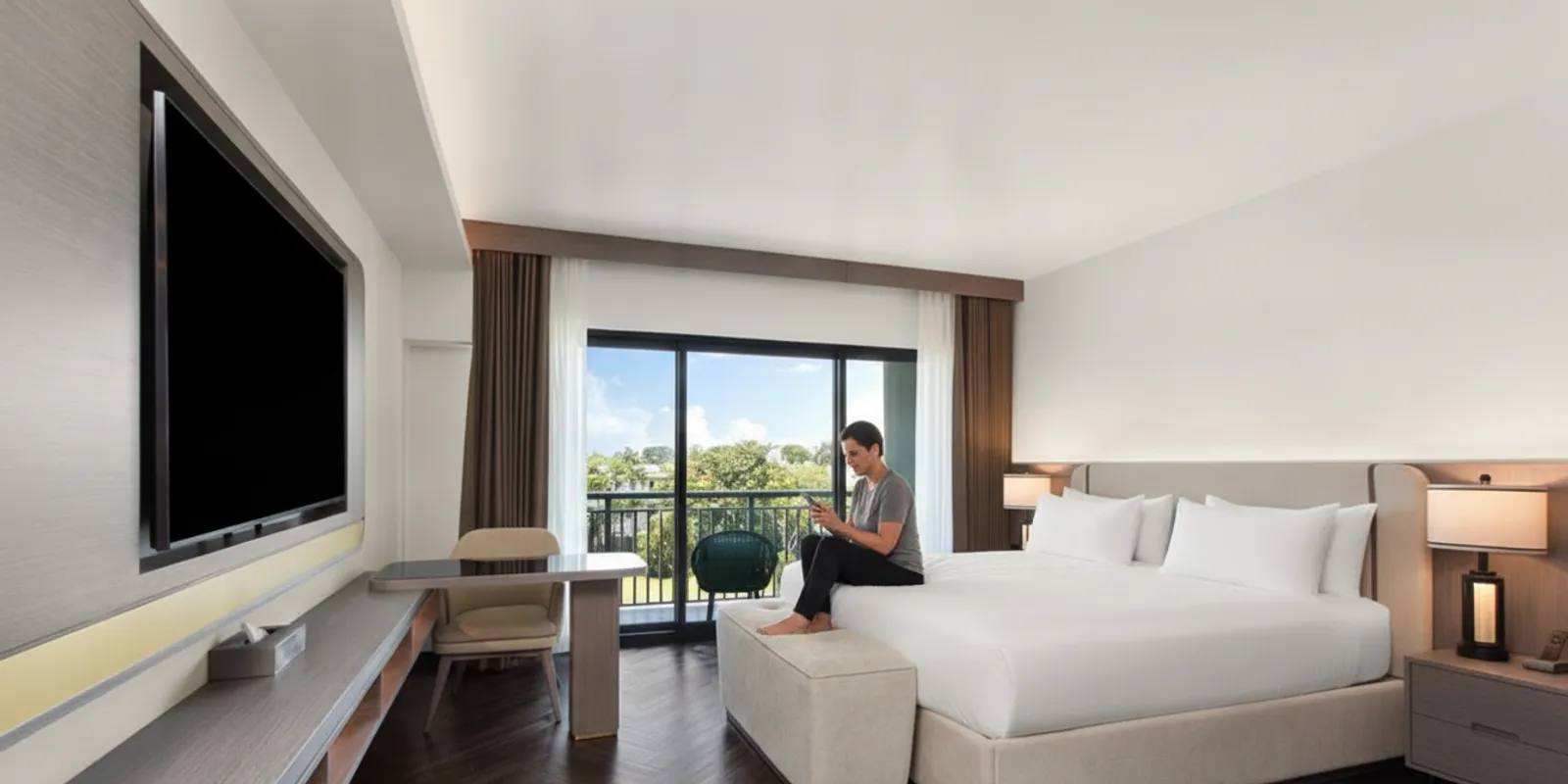
Finding a hotel with accessible rooms south florida travelers can rely on starts with the details of a particular room and the route to it, not a general label. Accessibility needs vary, and room categories or features can differ from one property to another. Before booking, describe what you need to do during the stay, ask direct questions about the room and shared spaces, and request confirmation for your dates.
What should an accessible room make possible?
Begin with the activities that matter to you. A useful room is not simply one that has a particular label; it is one whose actual layout and features support your planned use. You may need to enter without encountering a step, move between the doorway and bed, reach controls, use the bathroom, or keep a mobility device close at hand. Another traveler may focus on visual or hearing-related alerts, the ability to communicate with staff, or a companion’s access to the room.
Write your needs as actions rather than relying on broad terms. “I need a step-free route from the drop-off point to the room” gives staff a specific route to describe. “I need enough clear space beside the bed to position my wheelchair” identifies a functional requirement. “I need a roll-in shower rather than a tub” is more useful than asking whether the bathroom is accessible. The hotel can then respond to the features that are relevant to your stay.
Separate essentials from preferences. A shower configuration may be essential, while being close to the elevator may be a preference. A preference still matters, but making the distinction helps you and the property discuss alternatives without treating a convenient feature as a substitute for a required one. If a feature is non-negotiable, say so plainly and ask the property to confirm it for the specific room you would reserve.
Think about how you use a room over a full day, not only whether you can enter it. Consider waking, dressing, bathing, storing mobility equipment, charging devices, moving around with a companion, and getting to the exit. A room can have a suitable bathroom but a difficult path between the bed and bathroom. It can have a step-free entrance yet leave controls or storage out of reach. Listing the sequence helps reveal the details worth confirming.
How can you turn your needs into specific questions?
A short preparation worksheet makes it easier to compare answers. For each activity, note what you need, what detail would help you verify it, and whether the feature is essential or preferred. You do not need to share private medical information to ask about room dimensions or a route. Describe the practical requirement, and provide only the information that helps the property answer accurately.
- Entering and moving: Note whether you need a step-free path, a particular clear doorway width, turning space, or an unobstructed route from the entrance to the bed and bathroom.
- Bathing: Specify shower or tub preference, threshold needs, a seat, grab-bar placement, usable sink space, and door operation if relevant.
- Sleeping and transfers: Ask about bed height, clear space beside the bed, and whether furniture can be moved. Do not assume an adjustment is possible; ask first.
- Controls and storage: Identify any need to reach light switches, thermostat, outlets, closet rods, shelves, or other frequently used items.
- Communication: Describe any visual alert, accessible communication equipment, or other room feature you need and ask whether it is available for your dates.
- Travel companion: Explain whether someone else will share the room and whether the layout needs to accommodate assistance or additional equipment.
Where a measurement will determine whether a room works for you, ask for that measurement rather than a general assurance. Examples include the clear width of the entry and bathroom door, the usable space beside the bed, or the shower threshold. Explain how you plan to use the space; the same dimension can matter differently depending on a device, transfer method, or companion arrangement. If the staff member cannot confirm a measurement, ask whether someone at the property can check it.
Photos or a room diagram may help you understand the layout, but they cannot replace a measurement or a clear answer about the room assigned to your reservation. Ask whether the image shows the same category and configuration being discussed. A wide-angle photograph can make a room look more spacious than it is, and furniture placement may vary. Use images as supporting information, not proof of a feature you depend on.
Which room features deserve a closer check?
Start with the route into and through the room. Ask whether there is a step-free route from the corridor, what the entry clearance is, and whether the path to the bed and bathroom stays clear with the furniture in place. If you use a wheelchair, walker, or another mobility device, explain what kind of clearance or turning space you need. Do not infer that a room will fit your device because the property uses an accessibility label.
Check the bathroom as a complete setup. Ask whether the specific room has a roll-in shower or a tub, whether there is a threshold, and whether a shower seat or grab bars are present. If grab bars are important, ask where they are positioned rather than whether the bathroom has them in general. Check the sink arrangement, bathroom door and approach space as well. A single feature does not answer whether the whole bathroom will work for you.
Then review the bed area and controls. Ask about the height of the bed if transfers are part of your routine, and whether there is usable space on the side you need. Find out whether furniture can be moved or whether the room layout is fixed. Confirm that you can reach lights, climate controls, outlets and storage you expect to use. If you need to charge a device overnight, ask where outlets are located in relation to the bed.
For hearing- or vision-related requirements, name the feature rather than assuming it is included with a room category. Ask about visual alerts, accessible communication equipment, and how you can contact the front desk from the room if you need assistance. If a device or accommodation must be requested in advance, ask how the request is recorded and whether it needs to be reconfirmed before arrival. Do not rely on a general promise that the property will “make arrangements” without knowing what those arrangements are.
Finally, clarify room assignment. Ask whether the feature you discussed belongs to a specific room type or is an item that can be supplied on request. Ask if the property can confirm that the room or required feature will be available for your travel dates. If the answer depends on availability, find out when the property can verify it and what alternatives would meet your essential needs. Avoid making a nonrefundable decision based on an assumption that an unconfirmed feature will be present.
How should you assess routes and common areas?
The room is one part of a hotel stay. Picture the journey from arrival to the room and onward to the places you expect to use. Ask how you will get from the drop-off area to the entrance, through the lobby, to the elevator, along the corridor and into the room. If stairs, doors, long distances or changes in level affect your plans, ask about each part of the route rather than asking whether the hotel is accessible overall.
Make a list of the shared spaces that matter to your itinerary. That might include a dining area, meeting space, pool, restroom or another facility. Ask whether each place has a step-free route, whether the entrance and doors are usable for you, and whether seating or other features you need are available. For a pool or event space, ask about the specific access feature you need and whether it is available during your stay. Do not treat access to one shared area as evidence that every facility has the same route or setup.
Consider the distance and sequence as well as the presence of a route. A route may technically connect two spaces but still be tiring or difficult for your needs if it is long, exposed, crowded, or has a door that is hard to operate. Ask where the elevator is in relation to the room and the places you expect to visit. If you need a rest point or assistance along the way, describe that need and ask what can be confirmed. Staff can often give a more useful answer when they know which destination and route you mean.
Koosh Collection provides an accessibility policy for travelers to review. Use it as a starting point, then ask the property about details that are unclear or specific to your dates, room and planned route. A policy can explain the general approach, but it does not establish that a particular room, measurement or amenity is available for your reservation. When an exact feature matters, request a direct answer.
For a broad overview of the collection, the Koosh Collection hotels page provides a way to identify properties to consider. Each property is separately positioned, so confirm accessibility details with the specific hotel rather than carrying assumptions from one location to another. A room feature discussed for one property does not establish that another has the same configuration.
What should you ask about arrival and parking?
Arrival details can determine whether the first part of a trip feels manageable. Ask where a vehicle can stop for unloading, whether the path from that point to the entrance is step-free, and how the route is laid out. If you need help with luggage or another part of arrival, ask what assistance may be available and how to arrange it. Do not assume that help will be available at a particular time unless the property confirms the arrangement.
If you are driving, confirm parking directly. Ask whether accessible parking is available, where it is in relation to the entrance, how you reach the lobby from the parking area, and whether any vehicle restrictions apply. If you use a van with a lift, state the vehicle height and unloading needs. A parking space alone does not answer whether the route from it works for you. Ask about procedures and fees as part of the same conversation, and confirm the information for the property you intend to visit.
If you will arrive by taxi, rideshare or another vehicle, ask for the most suitable drop-off point and whether the driver can wait while you enter, if that is important to your plan. If you are arriving late, ask how you will reach the entrance and front desk at that time. Save the directions and the property contact details where they will be available during travel. If you need to make a call on arrival, plan for how you will do that if your phone battery or connection is unavailable.
Think beyond the curb-to-lobby route. Ask whether the path to your room includes a change of elevator, a long corridor or a door you may need help opening. If you plan to visit a shared facility soon after arrival, consider whether you need to check in, leave equipment or rest first. A clear arrival plan does not require a minute-by-minute schedule; it simply identifies potential barriers before you are tired or carrying bags.
How do you compare Hollywood and Fort Lauderdale options?
South Florida trips can combine hotel time with beaches, meetings, dining and other outings. Accessibility planning therefore includes both the room and the places you intend to visit. A nearby attraction or beach does not establish that its entrance, route, restrooms or facilities meet your needs. Check those details separately if they are central to your plans, and leave room in the itinerary for travel between locations.
For a Hollywood stay, review the Dolce by Wyndham Hollywood property information as a starting point for a property-specific inquiry. Ask about the room available for your dates and the route from arrival to the room and any shared spaces you plan to use. If you are looking at room categories, the rooms page can help begin the conversation. Do not infer accessibility features from a room name or photograph; confirm the layout and feature directly.
For Fort Lauderdale, the Barley House property page is a property-specific starting point. Ask about the room, route, courtyard and shared facilities you plan to use. Treat each answer as specific to that property and your dates. Details at one Koosh Collection location do not prove the same feature is present at another.
The collection’s central booking route may direct travelers to Dolce inventory. Before finalizing a reservation, make sure the property named in the booking path is the property you intend to visit. For property-specific questions or help identifying the right contact route, use the contact page. This is especially useful if you are comparing options and need a response about a specific room or route before choosing.
When location is part of your access plan, be precise about what you mean by convenient. You might value a shorter trip to an event, a particular arrival route, or the ability to return to the room between activities. Ask what can be confirmed about the hotel itself, and verify separate transportation or destination details with their respective providers. This keeps a hotel’s room features distinct from the access conditions of places outside the property.
How can you request and document the details?
A concise, organized message makes it easier for staff to answer the right questions. Include your travel dates, the property and room type you are considering, the essential features you need, and any relevant dimensions. You do not need to provide a diagnosis. Explain the practical task, such as needing a step-free route or a shower without a threshold, and ask the property to confirm whether it can meet that requirement for your stay.
- Describe your essential needs. Explain what you need to enter, move around, bathe, communicate or do on arrival. Mark preferences separately.
- Name the room or feature. Ask which room type is available and request measurements or a description for the particular feature that matters.
- Check the complete route. Ask about the way from drop-off or parking through the entrance, lobby, elevator and corridor to the room. Add shared spaces you plan to use.
- Confirm arrival logistics. Ask about unloading, parking, vehicle clearance and assistance arrangements that affect your arrival.
- Request a written reply. Keep the response with your reservation details. Ask for confirmation in writing before relying on an essential feature.
- Repeat the key details. When you book or update the reservation, restate the essential request and ask whether it has been noted.
- Ask about a backup. If the room is unavailable, ask what alternative room or arrangement might meet the same essential need. Evaluate it on its own details.
A useful question is specific but not adversarial. For example: “I need a step-free route and a roll-in shower for my stay from [dates]. Can you confirm whether a room with those features is available, describe the bathroom threshold and grab-bar placement, and tell me the route from the entrance to that room?” If space beside the bed is essential, add the side and the measurement you need. If it is a preference rather than a requirement, say so.
Ask the property to clarify uncertain terms. “Accessible,” “easy access” and “close to the elevator” can mean different things to different people. If a response does not answer the question, follow up with one detail at a time: “Is the shower roll-in, or does it have a raised threshold?” or “Is there a step-free route from the parking area to the lobby?” A clear answer is more useful than a string of general assurances.
Keep a record of the person or department that answered, the date of the exchange, the property, your dates and the exact features confirmed. This is a practical reference if you need to follow up. It is not a guarantee that conditions can never change, so ask whom to contact if the room assignment or arrangement changes before arrival. Avoid treating an old email, an unverified web listing or a conversation about another property as confirmation for the current trip.
How can you work through two common planning situations?
When the bathroom setup is essential
Suppose a traveler needs a roll-in shower and a clear approach to the shower seat. The first step is to state those requirements directly and ask whether a specific room type with that configuration is available for the dates. Next, ask whether there is a threshold, whether a seat is present, and where the grab bars are placed. If the traveler also needs room beside the bed for a transfer, ask for that detail separately rather than assuming the bathroom answer covers it.
If staff reply that the property has accessible rooms, the traveler can politely ask which features are included in the room being discussed. If the answer is that a roll-in shower is subject to availability, ask when availability can be checked, whether the request can be noted, and what alternative arrangement exists if it cannot be confirmed. The traveler can compare the answer with their essential needs before booking, rather than discovering that a tub or a threshold does not work on arrival.
When the route and arrival matter as much as the room
Consider a traveler who can use a room once inside but needs a clear step-free route from the vehicle and accessible parking suitable for a lift-equipped van. The inquiry should cover the parking location, vehicle height, unloading space, path to the entrance, and route from the lobby to the room. The traveler should also ask whether the room is near the elevator if that is important, while keeping that preference distinct from the essential route and parking needs.
If the hotel can confirm the room but not the van clearance, the trip plan is still incomplete. The traveler can ask for a precise follow-up from the person who manages parking or arrival, and avoid assuming that a standard accessible space accommodates the vehicle. If arrival is late, the traveler should also ask how to reach the entrance and front desk then. This example shows why room selection, transport access and timing should be confirmed as separate parts of one stay plan.
What should you do if an answer is incomplete or changes?
When a response is vague, identify the missing fact and ask for it directly. If staff confirm a room category but not the bathroom configuration, ask specifically about the shower or tub. If they confirm a step-free entrance but not the route from parking, ask for that route. If a measurement is unavailable, ask whether a staff member can inspect the room or provide a suitable description. It is reasonable to pause the decision until you understand whether an essential requirement can be met.
If the exact room is not available, ask what other rooms or arrangements could work, then compare them against the same checklist. Do not accept a room name or a general promise as an equivalent to a required feature. Ask which details are certain, which depend on availability, and when the property can provide a final answer. If no option meets an essential need, consider whether a different property or set of dates is necessary rather than relying on an unconfirmed workaround.
Before departure, review your written confirmation and check whether your dates, property and key needs are correct. If something has changed, contact the property and ask what the change means for your specific arrangement. Keep the booking reference and contact details accessible. If the property cannot confirm a feature on arrival, explain the essential requirement calmly and refer to the details previously discussed. A written record helps make the conversation concrete, but it does not remove the value of checking again.
What questions should you ask before booking?
- Which specific room type is available for my dates, and which accessibility features are confirmed for that room?
- What are the clear widths of the entry and bathroom doors, and is the route to the bed unobstructed?
- Does the bathroom have the shower or tub configuration I need? Is there a threshold, a seat, and the grab-bar placement I require?
- Can you describe the bed height, usable space beside it and access to controls or storage?
- Is there a step-free route from the drop-off or parking area to my room, including the lobby, elevator and corridor?
- Where is accessible parking, and can a vehicle with my height and lift requirements use the space and route?
- Can I reach the dining, meeting, pool or other facilities I plan to use by a route that works for my needs?
- Are visual alerts, communication equipment or other requested features available, and how should I arrange them?
- Can you confirm the essential arrangements in writing and note them on my reservation?
- If a room or feature changes before arrival, whom should I contact?
Ask about accessibility arrangements
How can you make the final choice?
Compare the property’s answers with your actual needs, not with a broad room label. A strong plan has clear information about the room, the route, shared spaces and arrival. Decide which features are essential, check that those details apply to the property and dates you are considering, and follow up wherever an answer leaves room for guesswork.
For the next step, review the trip-planning information and make any property-specific inquiry before you depend on an arrangement. Koosh Collection’s properties are distinct, so confirm details for the hotel you plan to visit and keep your written responses with your reservation. Taking time to verify the features and route can help you choose a South Florida stay that better fits your access needs and travel plans.