
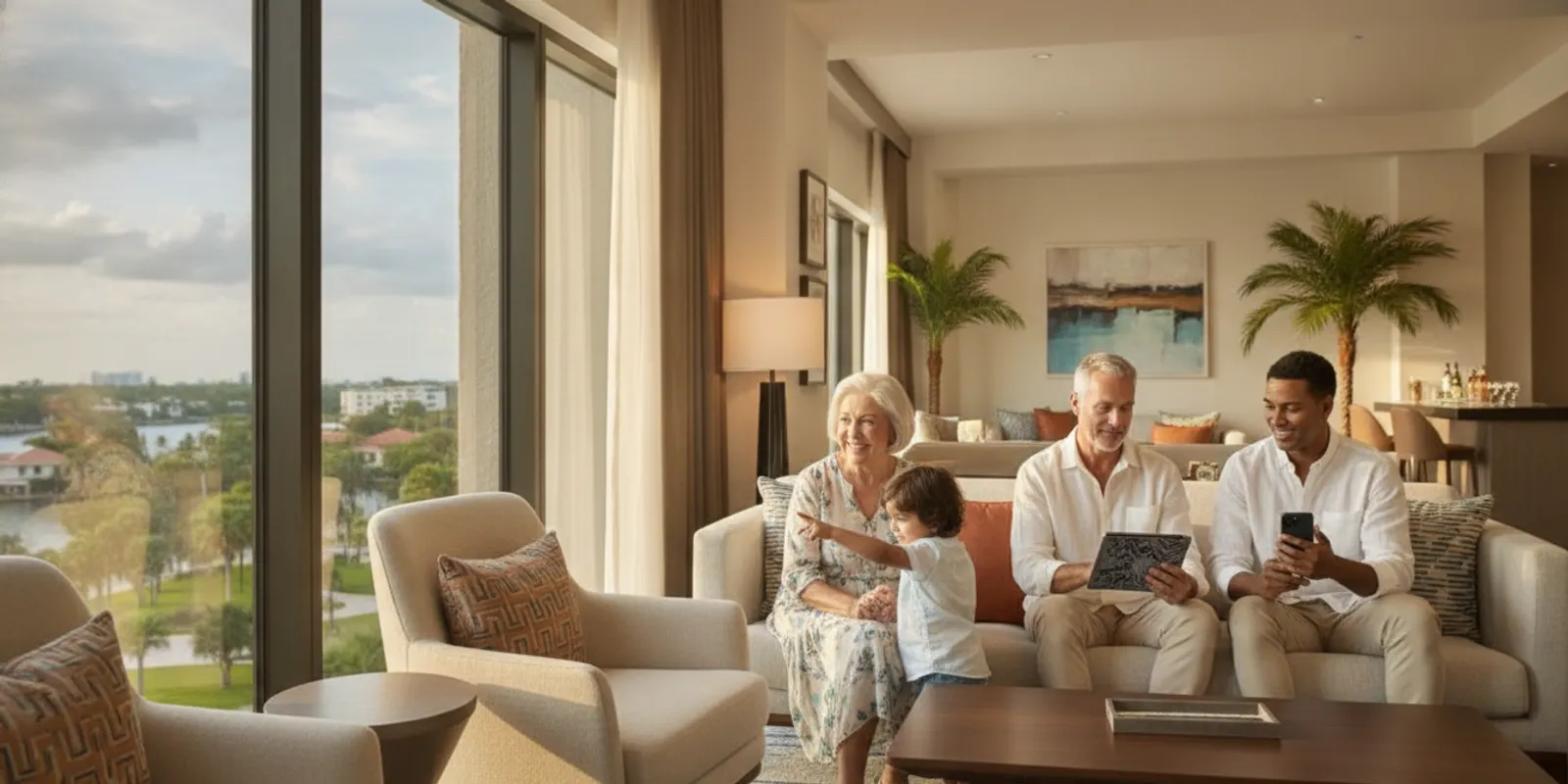
Planning a hotel for multigenerational family travel in Florida starts with more than choosing a destination. Grandparents, parents, and children may share the same trip but have different needs for sleep, privacy, mobility, meals, and downtime. A little planning helps you choose a base that makes time together easy while leaving room for different routines.
Explore available stay options
What should your family agree on before choosing a hotel?
Begin with the shape of the trip, not a room category. Make a short list of who is traveling, what each person needs, and which plans matter most. A two-night family visit built around one event can call for a different setup than a longer beach break with several days together.
Ask each household to identify its essentials. One person may need a quiet place to rest during the day. A parent may need to stay close to young children. An older traveler may value convenient access to the lobby, dining, or parking. Teenagers may want some independence while still being part of the group. Write down the needs before comparing properties so that attractive photos do not distract from practical fit.
- Group size: Count adults and children, and note ages where they affect sleeping arrangements.
- Room privacy: Decide whether family members need separate rooms, separate beds, or a suite layout.
- Mobility: Identify step-free access, elevator use, bathroom setup, or walking-distance concerns that should be verified.
- Schedule: Note early starts, midday rest, meal plans, and any fixed event times.
- Shared priorities: Choose one or two activities everyone hopes to enjoy, then leave other time open.
It can help to appoint one person to coordinate questions and keep the answers in writing. That person can also share the final booking details with the group, including the hotel address, arrival plan, and any confirmed room features. A central point of contact reduces the chance that different family members rely on different assumptions.
How should you think about room configuration?
Room count alone does not tell you whether a hotel will work for a family. Think about how people will sleep, move between rooms, and spend quiet time. If two generations keep different bedtimes, a layout that offers some separation may matter more than a shared living area. If children are young, the adults responsible for them may prefer nearby rooms, but proximity and connecting doors must be confirmed rather than assumed.
Make a rooming plan before you contact a property. For example, list each room occupant, preferred bed arrangement, and any must-have features. Ask whether the requested room type is available for your dates, whether the described bed setup is guaranteed, and whether rooms can be placed near one another. A request is not the same as a confirmed assignment, so ask what the reservation will actually guarantee.
- Ask how many people each room type can accommodate and what beds are in it.
- Confirm whether a suite has a separate sleeping area or simply more open space.
- Ask whether adjoining or nearby rooms can be requested and when placement is finalized.
- Check whether accessible room types are available for the dates and needs involved.
- Verify any crib, rollaway, or other sleeping arrangement directly; do not assume it is offered.
For a larger group, compare the options by function rather than by label. A suite may provide a place to gather, while multiple standard rooms may give different households more privacy. Neither choice is automatically better. Consider the full daily routine: who wakes early, who needs naps, where bags and mobility aids will go, and whether the group expects to spend much time in the room.
Koosh Collection lists room information for its portfolio on the Rooms page. Its properties are separately positioned, so review the property-specific details and confirm exact availability for your dates rather than treating the collection as a uniform hotel product.
What accessibility details should you confirm?
Accessibility is personal and specific. A general statement that a property is accessible may not answer whether a particular room, route, or bathroom meets one traveler’s needs. Before booking, describe the practical requirements plainly and ask the property to confirm what is available in writing.
Depending on the traveler, useful questions may include whether there is a step-free route from arrival to the room, how elevators are accessed, whether the room has the needed bathroom features, and how far the room is from shared facilities. If someone uses a wheelchair or walker, ask about doorways, turning space, thresholds, and the path from parking or drop-off. If the need is related to hearing or vision, ask whether appropriate room features are available and how to request them.
Dolce by Wyndham Hollywood is the collection’s Hollywood property. Wyndham lists a business center, fitness center, rooftop heated pool, and 24/7 desk, while room configurations and accessible options should be checked for the chosen date. The property’s Dolce hotel information can help you identify the right questions, but a page description does not establish that a specific room is available.
Barley House is marketed as a Fort Lauderdale boutique hotel near the beach, with balconies and a courtyard pool. Those features may suit some family trips, but they do not answer an individual accessibility question. Check the Barley House property information and contact the property about the exact route, room, and facilities your party needs. Do not assume that a feature at one property is offered at another.
How can shared spaces help everyone enjoy the trip?
Shared spaces can make a multigenerational stay feel connected without requiring every person to follow the same schedule. A comfortable place to sit together gives relatives a simple option between outings. Pool areas, lounges, dining spaces, and hotel event facilities can each serve a different purpose, but their hours, access rules, and suitability should be checked in advance.
Consider how your family will use a shared space. Is it mainly a meeting point before heading out? Will some travelers want to sit while others swim? Does the group need a quiet indoor place during the hottest part of the day? If a common area is central to your plans, ask whether it is open to hotel guests, what hours apply, and whether any reservation or event schedule affects access.
At Dolce, the rooftop pool is a marketed property feature. A pool can be an appealing gathering point, but families should confirm current access arrangements, operating hours, age or supervision rules, and any other details relevant to their group. At Barley House, the courtyard pool is part of the property’s positioning; confirm current use and practical access before making it a key part of the itinerary.
Dining plans also deserve care. A family may have different preferences, dietary needs, or routines. Ask which dining options are currently operating at the property and what is available on the dates of travel. Do not assume meals are included in a room rate or that a dining concept mentioned in general information is open. For a specific dietary or religious need, describe the request directly and verify its scope, timing, and arrangements before relying on it.
Koosh Collection describes dining across its portfolio on the Dining page. Availability and service details are property-specific. Confirm with the relevant hotel which venues and services are operating, and avoid building a family meal plan around an unverified assumption.
How do you plan a flexible pace for different generations?
A successful family itinerary gives people shared moments and permission to take breaks. Florida’s heat, travel distances, and a busy activity schedule can affect children and older adults differently. Rather than planning every hour together, set a few anchors: an arrival meal, one group outing, or a time to meet back at the hotel. Keep the rest adjustable.
Build recovery time into the day. A morning activity followed by a quiet afternoon can work better than a chain of reservations. If some relatives prefer a slower pace, arrange a comfortable alternative rather than making the entire group wait or rush. Families can divide into smaller groups for part of a day, then meet again for a meal or evening activity.
- Choose the day’s main activity. Keep one priority rather than stacking several must-do plans.
- Estimate the full outing. Include transport, walking, waiting, meals, and the return journey.
- Set a shared meeting point. Make it clear where the group will reconnect if plans split.
- Protect downtime. Leave room for naps, a swim, reading, or simply resting in the room.
- Recheck the plan each morning. Weather, energy, and individual needs can change.
For a family that includes observant travelers, clarify schedules and service needs before arrival. Dolce markets certain kosher and Shabbat-related amenities, but each arrangement should be confirmed directly for the dates and circumstances involved. Do not assume a service, meal, delivery radius, or religious suitability without confirmation. The property’s kosher amenities information is a starting point for a focused conversation, not a substitute for checking details with the hotel.
Which nearby activities fit a family with varied interests?
Start with the location that best supports the main reason for the trip. A family attending an event, visiting relatives, or planning beach time may value different things. Choose a small number of activities that work for the group, then let individuals add optional plans. This creates a shared experience without making every traveler participate in every outing.
Dolce by Wyndham Hollywood is in Hollywood, Florida.
Across from Hollywood's casino and entertainment district and minutes from Hollywood Beach.
Barley House is in Fort Lauderdale and is marketed as about 300 yards from the beach, near Bahia Mar Marina. “Near” does not mean beachfront or private beach access. Check maps, transport, walking conditions, and current local details before setting expectations, especially for travelers who may find longer walks difficult.
When comparing activities, consider practical access as well as appeal. Ask how far the destination is from the hotel, whether transport is needed, whether the route involves stairs or long walks, and whether tickets or timed entry should be arranged in advance. A beach outing, for example, may require planning for shade, water, rest breaks, and a return option. A city outing may call for a meeting point and a plan for anyone who wants to leave early.
Use the hotel as a base, not as a promise that every activity will be convenient. The Plan Your Trip page can help you explore the collection’s trip-planning information. Confirm the details that matter to your family directly, particularly transportation, current activity hours, and access requirements.
How should you compare hotel options?
Make a simple comparison using the priorities your family already agreed on. Avoid relying on broad labels such as “family friendly” or “luxury” to answer specific questions. A clear comparison helps expose gaps before you commit.
- Location: Which hotel is closer to the trip’s main purpose, and what transport will be needed?
- Room fit: Are the beds, room capacity, and privacy suitable for the actual party?
- Accessibility: Has the property confirmed the features needed by the traveler who requested them?
- Shared spaces: Are the facilities your family expects available and usable at the planned times?
- Dining: Which venues and meal arrangements are confirmed, and what remains uncertain?
- Flexibility: Can the group split up and reconnect without making the itinerary stressful?
- Booking clarity: Does the reservation show the correct property, dates, room type, and requests?
Koosh Collection presents a distinct portfolio rather than one standardized stay. Dolce by Wyndham Hollywood may be relevant to a family prioritizing a Hollywood location and property-specific amenities. Barley House may be relevant to travelers looking for a Fort Lauderdale boutique setting near the beach. The proposed LS Hotel & Residences should not be treated as open or bookable inventory unless an operator confirms that status and availability.
Before selecting a hotel, compare only details that have been confirmed for your travel dates. If a feature matters to the whole group, ask for a clear answer rather than relying on a general description. If a feature is optional, keep a backup plan so an unavailable facility does not disrupt the trip.
How should you handle a group booking step by step?
Large family trips can become confusing when each household makes a separate assumption about dates, room types, or arrival times. A simple process keeps the decision manageable without forcing one person to guess what everyone needs. It also creates a record of what the property has actually confirmed.
- Set the date window. Collect each household’s arrival and departure constraints. If dates are flexible, identify the range before asking for availability, rather than comparing several unrelated date combinations.
- Build a rooming chart. Use one line per room, with names or household, preferred beds, children’s ages when relevant, and essential access features. Mark preferences separately from requirements.
- Rank the requirements. Label each item “must have,” “strong preference,” or “optional.” This helps the group make a decision if no single arrangement meets every wish.
- Choose the location logic. Decide whether the trip is centered on Hollywood, Fort Lauderdale, a beach visit, or another fixed purpose. Do not pick a property based only on an assumed short drive; verify routes and transport needs.
- Send one complete inquiry. Include dates, party size, rooming chart, accessibility questions, and any important facility or meal requests. Ask for answers by room type and by property.
- Review the written response together. Share the details with the family and identify anything still marked as requested, subject to availability, or unconfirmed.
- Book only when the setup works. Compare the confirmation with the rooming plan. If an essential element is missing, contact the property before relying on the arrangement.
For instance, imagine grandparents who need a quiet afternoon, parents traveling with young children, and older children who want their own space. One suite could simplify shared time, but it may not provide separate sleeping zones. Two rooms might offer better privacy, but only if their locations and bed arrangements work for the adults responsible for the children. The right answer is the one the property can confirm and the group can use comfortably—not the category name that sounds most appealing.
A second example is a family with one traveler who uses a mobility aid. The group may be tempted to reserve the first room type labeled accessible. Instead, describe the exact route and room features needed, ask what is available, and confirm the details for the specific stay. If the hotel cannot confirm a required feature, consider another room or property rather than planning around an uncertain assumption.
What should you plan for meals, rest, and shared time?
Family meals can be the most valuable shared part of a trip, but they are also a common source of conflicting expectations. Different generations may eat at different times, need different food choices, or prefer a quiet meal after an outing. Decide which meals are important to have together, then treat other meals as flexible. This avoids turning every breakfast or snack into a group coordination problem.
Before booking, separate three questions: what is physically available at the property, what will be operating on your dates, and what is included in your reservation. A restaurant listed on a general page does not by itself answer whether it will be open at a particular time or whether meals come with the room. Check your confirmation and ask the property about specific dietary requirements. If a meal arrangement is essential, request written confirmation of the venue, timing, service method, and any conditions.
For an observant household, the conversation may need more detail. Dolce advertises kosher and Shabbat-related amenities, including certain arrangements that are property-specific. Ask what is currently offered, what advance notice is needed, which dates or holidays are covered, and whether the requested arrangement applies to the people and rooms in your booking. A claim about one named venue or amenity should not be treated as a portfolio-wide guarantee. Keep the answer with your booking documents.
Rest deserves similar planning. A family can designate an easy meeting window rather than requiring everyone to attend every activity. For example, relatives may meet for a relaxed afternoon in a common area after separate morning plans. Before relying on a particular shared space, check its operating hours, guest access, and any rules affecting children or supervision. A pool or lounge can be a useful option only if it is open and practical for the group on that day.
Think about the room as a recovery space, too. A traveler who needs quiet may prefer a room away from a busy shared area, while someone with limited mobility may value a route with fewer barriers. These preferences can conflict, so rank them. Ask what can be requested and what can be guaranteed, then decide whether the compromise is acceptable before arrival.
How can you build an itinerary that leaves room to change?
A multigenerational schedule works best when it has a few clear anchors and generous margins. Travel time can be tiring, and different people may need more time to get ready, walk, eat, or rest. Treat the itinerary as a plan for making choices, not a timetable that every person must obey.
Start by writing down fixed commitments: travel arrival, a family celebration, or a timed activity. Add realistic travel and transition time around each. Then choose one shared activity for the day and keep another option in reserve. If energy is high, the group can add it. If not, the day still feels complete.
- Use a morning check-in. Confirm who wants to join, what the weather is like, and whether any needs have changed.
- Offer a low-effort alternative. Pair a longer outing with a shorter or quieter option so no one has to choose between keeping up and staying with the group.
- Agree on a return plan. Decide how people will get back if they leave early, and who has the hotel address and contact details.
- Keep essentials together. Share the day’s location, meeting point, and transport plan in a group message.
- Leave unscheduled time. A free block lets relatives nap, swim, read, or explore at their own pace.
For a beach-focused day, the whole outing includes more than time on the sand. Consider the path from the hotel, the distance from drop-off to a place to rest, shade, drinking water, and how the group will carry supplies. Some relatives may prefer a shorter visit and a planned return. For a city or event day, agree where everyone can meet if a person wants to leave early or move at a different pace. These small choices reduce friction without requiring everyone to do everything together.
Keep an alternate indoor plan for weather or fatigue. It could be a quiet period at the hotel, a meal, or a change in the outing. Do not make the backup depend on an amenity until its access and hours are confirmed. The flexibility is the point: when a plan changes, the family can still spend time together without treating a missed activity as a failed day.
What should you ask before booking?
Prepare your questions in one message or call. Include dates, party size, room needs, accessibility requirements, and the facilities that influence your decision. Ask the property to distinguish between guaranteed reservation details and requests that cannot be guaranteed.
- Which room types are available for these dates, and what beds and occupancy do they include?
- Can rooms be placed near one another, and is that arrangement confirmed or only requested?
- What accessible room features are available, and can the specific details be confirmed in writing?
- Which shared facilities will be operating during our stay, and what hours or restrictions apply?
- Which dining options are open, and are any meals included in the booking?
- What should we know about transport, drop-off, parking, or the route to nearby activities?
- How should we communicate special requests, and when will the hotel confirm them?
Keep the response with your travel documents. Once you book, check that the confirmation reflects the correct property and room type. Follow up on any important request closer to arrival, especially if the request affects mobility, sleeping arrangements, or a time-sensitive service.
Frequently asked questions
Should we book one large suite or several rooms?
It depends on your family’s need for privacy, sleeping arrangements, and shared space. Compare the actual layouts and occupancy limits, then ask whether the rooms can be located near one another. Do not assume a suite has a separate bedroom or that multiple rooms will connect.
Can we count on adjoining rooms?
Only if the property confirms that arrangement for your dates and explains whether it is guaranteed. If adjoining rooms are not confirmed, decide whether nearby rooms or another room configuration would still work.
How early should we confirm accessibility needs?
Raise the need while comparing options, before booking if possible. Describe the features that matter and ask the hotel to confirm the specific room and route available. Reconfirm the details before arrival.
Are hotel meals included for the whole family?
Do not assume so. Check the reservation terms and ask which dining options are operating during the stay. Confirm any dietary or religious arrangements directly with the relevant property.
What if members of the family want different activities?
Plan one or two shared anchors and leave open time for smaller groups to choose separate activities. Agree on a meeting point and return plan so people can move at different speeds without losing the shared structure.
Contact Koosh Collection with your family’s stay questions
Plan around what you can confirm
The best choice is the hotel that fits your family’s confirmed room, access, location, and schedule needs—not simply the one with the most appealing description. Compare property-specific details, ask direct questions, and leave enough flexibility for several generations to enjoy Florida at their own pace.