
Choosing among hotel amenities Fort Lauderdale visitors may see advertised takes more than counting features on a page. The right fit depends on how you plan to spend the day, who is traveling, and which details need confirmation before arrival. This guide focuses on practical comparisons for beach leisure, business travel, families, and events, while keeping each property’s claims separate.
What should hotel amenities help you do?
An amenity is useful when it supports a real part of your trip. A pool may matter if you expect to spend time at the hotel. A balcony can be appealing if you want a private place to pause between activities. A convenient location may save time, but it is not the same as an on-site service. Start with your itinerary and then look for features that fit it.
It also helps to separate three kinds of information:
- Property features: items described as part of the hotel, such as a courtyard pool or balconies.
- Room details: features that may apply only to a specific room category or available inventory.
- Arrangements to confirm: services, access, timing, or event details that can vary and should be checked for your dates.
This distinction makes comparisons more reliable. A feature listed somewhere on a hotel website may not be included in every room, available at every hour, or suitable for every traveler. Read the details for the property and room you are considering, then ask a focused question if anything is unclear. Koosh Collection presents more than one property, so do not assume an amenity described for one hotel is shared across the collection.
Which amenities matter most for a beach-focused stay?
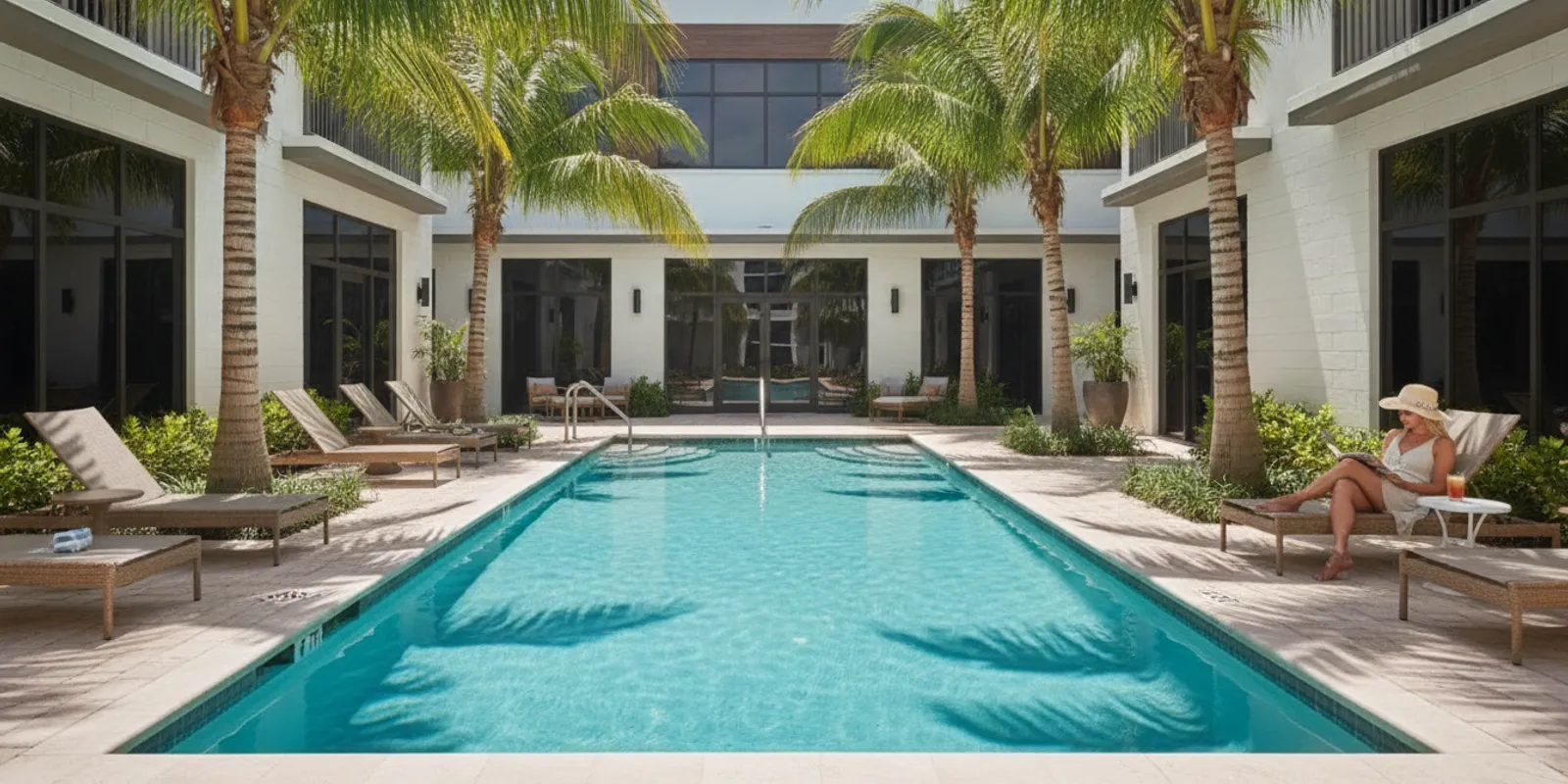
For a beach-oriented trip, consider how you want to divide time between the shoreline and the hotel. Barley House is marketed as a boutique hotel in Fort Lauderdale about 300 yards from the beach. Its Koosh pages also describe balconies and a courtyard pool. Those features may suit a guest who wants time outdoors both near the coast and back at the hotel. They do not mean the hotel is on the beach, offers private beachfront access, or includes a particular view with every room.
Before booking, check the room category rather than relying on a general description. If a balcony matters, ask whether the exact room type you are considering includes one and whether it is available on your dates. If the pool is important, confirm its current availability, access arrangements, and any posted rules. The rooms at Barley House page can help you review the published room categories, while the Barley House hotel page provides the property context.
Location language needs the same care. “Near the beach” is not a promise about walking conditions, route, travel time, beach equipment, transportation, or access. If you have mobility needs, small children, beach gear, or a tight schedule, map the route and ask the property what is practical from the entrance. The hotel’s address and its relationship to nearby places can help you decide whether the location works for your plans, but do not infer an included shuttle, beach service, or reserved access unless the property confirms it.
Think about your preferred balance. A traveler who wants to be outdoors for most of the day may value proximity more than extensive indoor facilities. Someone who expects to return to the hotel between outings may care more about a pool, balcony, or a comfortable room layout. Neither approach is universally better. The useful question is which features you will actually use and what needs to be confirmed in advance.
How should business travelers assess a hotel?
Business trips place different demands on a hotel stay. A guest may need a dependable place to prepare for a meeting, make calls, or rest between obligations. Do not assume that a hotel has a business center, meeting rooms, printing, or a particular internet setup just because those features are common elsewhere. Check the specific property information and ask about the task you need to complete.
Start with the workday. If you need to join video calls, ask what connectivity is available in the room and whether it is suitable for your planned use. If you need a quiet work area, review the room description and ask about the layout rather than assuming a desk or ergonomic chair is included. If you expect to work in shared space, ask whether such a space exists, when it is accessible, and whether it can be reserved. Those questions are especially important when your schedule depends on being online or private at a set time.
Next, consider logistics. Ask how arrival and departure fit your schedule, what parking or valet arrangements apply, and whether any charges or timing rules should be understood before arrival. Do not treat a nearby airport, marina, or business district as proof of a transportation service. If a meeting is off-site, compare the hotel location with the actual venue and allow for local travel conditions. The Barley House plan-your-trip page is a useful starting point for location planning, but check the details that matter to your itinerary directly.
For a team, identify the needs of each traveler before choosing. One person may need a quiet room for early calls, while another may need flexible arrival timing. If several colleagues will stay together, ask about room availability for the group and how individual reservations should be coordinated. A room block is not automatic simply because a hotel has multiple rooms; confirm any group process and terms with the property. If you need an actual meeting room, ask for the available space, permitted layout, equipment, hours, and total cost in writing.
Business travelers should compare a hotel against the work plan, not against a generic amenities checklist. A pool might be a welcome benefit after meetings, but it cannot substitute for the workspace or connectivity you require. Likewise, a central location is helpful only if it matches your destinations. Write down the non-negotiables, the nice-to-haves, and the items that need confirmation; that simple list prevents a polished description from obscuring a practical gap.
What should families look for?
Families often need a combination of room fit, easy transitions, and options for downtime. The first check is the room itself. Look at the published configurations and occupancy details for the exact dates you want. Ask whether the arrangement accommodates everyone in your party and whether beds, connecting rooms, or other requested details can be confirmed. Do not infer a particular sleeping setup from a broad room label.
Then consider how the hotel works between outings. Barley House is described with a courtyard pool, and its location is marketed as close to the beach. For families who expect to alternate between outdoor plans and hotel time, those may be relevant features. Confirm pool access and rules, and remember that proximity to the beach does not establish that towels, chairs, transportation, or other beach equipment are provided. Ask about each item instead of packing based on assumption.
A balcony can be a pleasant extra, but it is not a child-safety feature or a substitute for a larger room. If one is essential, confirm that it belongs to the room category you are booking. If you need a crib, accessible bathing features, or another particular room setup, contact the hotel before reserving and ask for a clear answer tied to the reservation. A general amenities list cannot tell you whether a particular request can be met on a particular date.
Families may also want to plan meal timing. Do not assume that a dining concept mentioned across the wider collection is open at Barley House or that a breakfast option is included with every rate. The customer’s Barley dining page has described named concepts as “Coming Soon,” so verify the current situation rather than planning around a restaurant or menu without confirmation. Review the Barley House dining information and ask what is currently operating, what is included, and whether hours fit your schedule.
For a multigenerational trip, agree on the pace before choosing. One part of the group might want beach time while another prefers to stay close to the hotel. Discuss how much time everyone expects to spend together, what room proximity would help, and whether any accessibility details need confirmation. A hotel amenity is valuable only if the people in your group can use it comfortably. Confirm room arrangements and essential requirements directly, then build flexibility into the day in case weather or energy levels change.
How can event organizers evaluate hotel features?
An event adds a different set of questions. It is not enough to see a general reference to private events or a capacity range. Organizers need to know which space is available, whether the proposed layout fits the event, what services are included, and what the total terms require. Ask for details about the specific date and event rather than treating promotional wording as a complete proposal.
Koosh materials for Barley House advertise event hosting and describe a general group range, but the dedicated event information does not establish the layout or suitability of every room for every type of function. That means a stated capacity should not be read as a guarantee of a seated dinner, presentation setup, dance floor, or any other configuration. Tell the venue how many people you expect, what format you have in mind, and what equipment or catering you may need. Request confirmation of the usable space and layout before making commitments.
Ask practical questions in a consistent order:
- Space: Which room or area is actually available on the date, and what are its usable dimensions?
- Layout: What guest count works for your intended arrangement, not simply the maximum advertised figure?
- Services: What furniture, audiovisual equipment, staffing, food, and setup are included, if any?
- Timing: When can vendors enter, when must the event end, and what is the setup or breakdown window?
- Terms: What deposit, cancellation, payment, and other conditions apply?
Do not assume a hotel’s dining page describes event catering or that a restaurant concept is available for a private function. Ask who will provide food, what is currently operating, and whether the arrangements can meet your event requirements. If a particular dietary standard or certification matters, specify exactly what you need and request current, venue-specific confirmation. A property-level label is not proof that each venue, kitchen, or event menu meets the same standard.
Koosh offers a Barley House private events page for event information. You can also review its general private events information to determine the appropriate enquiry path. Treat an enquiry page as a way to request details, not as evidence of confirmed availability, a published package, or a final quote. Keep the written response with your event plan so the organizer and vendors are working from the same confirmed details.
How can you compare room amenities fairly?
A simple comparison works better than a long wish list. Make a short list with one column for the feature, one for why it matters, and one for what has been confirmed. For example, a guest might list “balcony” because they want outdoor room space, then record the exact room category that includes it and whether that category is available. Another traveler might list “pool” and note that current access and hours still need confirmation.
Keep required needs separate from preferences. A confirmed accessible room configuration, an appropriate sleeping arrangement, or a suitable workspace may be essential. A pool or balcony may be desirable but flexible. Sorting the list this way makes trade-offs visible. If a hotel does not document a required feature clearly, ask before booking rather than hoping to resolve it after arrival.
Compare like with like. Check the same dates, guest count, length of stay, and room type when reviewing options. A feature shown on a property page may be available only in certain rooms, while a rate or offer may have different terms. Review what is included and what requires a separate request. The rooms page is a collection-level starting point, but use the relevant property’s page to confirm the actual room details.
Also account for location without turning it into an amenity. A hotel’s distance from a beach, marina, or meeting venue can influence convenience, but it does not establish a transfer, reserved entry, or service. Check routes and timing for your actual destinations. If location is the main reason for choosing a hotel, ask about the precise point of access and plan around the itinerary you will follow.
What should you confirm before making a reservation?
Before booking, turn unclear claims into direct questions. Use the page for orientation, then confirm details that could change your plans. The goal is not to ask every possible question. It is to identify which features matter most to you and obtain a reliable answer for the date, room, and people in your reservation.
A useful check can follow this sequence:
- Choose the property first. Make sure the location fits your destinations. Do not transfer amenities from another hotel in the collection.
- Select the room category. Read the room description and confirm any feature, bed arrangement, or accessibility requirement that matters.
- Check dates and availability. A published amenity does not guarantee a particular room or space is available for your stay.
- Ask about operating details. Confirm access, timing, rules, or service scope for pools, dining, parking, and other relevant features.
- Clarify cost and terms. Ask what is included in the quoted rate and whether separate charges or conditions apply.
- Save the response. Keep written confirmation with your reservation details, especially for event arrangements or essential requests.
If you are booking Barley House, ask about the balcony, pool, beach route, and any dining plans that are central to your trip. If you are booking for work, confirm the workspace and connectivity you need rather than assuming those features are available. If you are planning an event, request space, layout, service, and price details for the specific date. These checks are more useful than relying on a broad list of amenities without knowing how each item applies.
Use the official Book Now page to review booking options, and contact the property if you need an answer that is not clear from the reservation details. If a requirement is essential, obtain confirmation before completing the booking. This is particularly important when a specific room configuration, access need, event setup, meal arrangement, or operating schedule affects your decision.
What location and arrival details should you compare?
An amenity comparison should include the practical parts of getting to and using the hotel. A feature can look attractive on a page yet have little value if it does not fit the way you travel. Think about your arrival time, the places you plan to visit, and what you will carry. Then confirm how the hotel’s location and arrangements fit those needs. Do not assume that a nearby attraction means the property provides transportation, priority access, or a special route.
For a beach visit, check the route between the hotel and the beach and consider how your group will make the trip. Someone traveling with young children or mobility considerations may value different details than a guest walking out for a short visit. Ask what the hotel can confirm about access, and make your own plan for items you need to bring. A statement that a hotel is near the beach does not establish that beach equipment, changing facilities, or a ride is included.
For business or event travel, compare the address with the actual venue rather than a broad neighborhood label. Estimate the time needed to reach meetings, dining plans, or event locations, and check how you will handle transportation. If parking matters, ask what is offered and whether charges, limits, or timing conditions apply. The presence of a parking option should not be assumed from a hotel’s location or from details associated with another property.
Arrival timing can affect the usefulness of amenities, too. If you expect to arrive early or leave late, ask what arrangements may be available and whether they are guaranteed or subject to availability. Do not assume that check-in, luggage storage, pool use, or room access can be extended outside the stated terms. Write down the arrival and departure requirements that affect your trip, and confirm the relevant policy with the hotel before you rely on it.
How should accessibility needs shape your comparison?
Accessibility should be considered as a specific room and route requirement, not as a general impression. If you need an accessible room, clarify the features that matter to you and ask whether the exact room type is available for your dates. A label alone may not answer questions about the bathroom, doorway, bed height, route from the entrance, or other practical details. Describe your needs plainly and request confirmation before booking.
Think through the full stay, not only the room. Consider the route from arrival to the room, whether you will use the pool or other shared areas, and the path to the places on your itinerary. If a particular amenity is essential, ask whether it is accessible in the way you need. The property should clarify its own features and arrangements; do not infer accessibility from photographs, broad marketing language, or descriptions of another hotel.
Travelers may also have needs that are not obvious from a hotel’s standard amenities list. A family may need to know whether a room can accommodate a requested sleeping arrangement. A guest with a health or sensory consideration may need to ask about a specific environmental or service detail. Make requests early and keep the response tied to your reservation. A clear conversation is more dependable than relying on a general description to cover an individual requirement.
These checks do not need to make planning complicated. Identify what must be in place, ask direct questions, and verify what the hotel can provide for your dates. If a requirement cannot be confirmed, consider whether another room option or a different property is a better fit. This approach helps keep amenities useful in practice, rather than simply appealing in a list.
How should you distinguish Barley House from Dolce?
Koosh Collection represents multiple properties, and their amenities should not be blended together. Barley House is the Fort Lauderdale property discussed in this guide. Its marketed features include a location about 300 yards from the beach, balconies, and a courtyard pool. Confirm the room-level details and current arrangements directly, especially when the feature is central to your plans.
Dolce by Wyndham Hollywood is a separate hotel in Hollywood, not a Fort Lauderdale property. Its published amenities include a rooftop heated pool, fitness and business centers, free Wi-Fi, paid valet, and a 24/7 desk, according to the customer’s property information and Wyndham listing. Those details can help explain why one should compare properties by name and location, but they should not be attributed to Barley House. Nor should Barley’s balcony or courtyard-pool descriptions be assumed to apply at Dolce.
Some travelers may consider both cities as part of a broader South Florida itinerary. In that case, decide which destinations will shape most of the trip and compare each property independently. Check the correct hotel’s booking path, address, room details, and current facilities. A collection-level page can introduce the portfolio, but a property-specific page and direct confirmation are the safer basis for a decision.
How do you choose without overplanning?
Begin with the reason for travel, then select two or three features that will make the biggest difference. Beach-focused visitors may prioritize location, pool access, and a room type with a balcony if available. Business travelers may prioritize workspace, connectivity, and travel logistics. Families may put room configuration, pool rules, and meal timing first. Event organizers need written confirmation about the venue, layout, services, and terms.
Next, separate confirmed details from open questions. If a key feature is unclear, ask before booking. If it is only a preference, decide whether another confirmed feature is more valuable. This keeps the decision focused and prevents assumptions about a hotel from becoming part of your itinerary.
For Barley House in Fort Lauderdale, use its published property and room information as a starting point, then verify the exact options for your dates. A concise list of needs and direct questions will help you compare the hotel on what matters to you, rather than on amenities that may not fit your trip.
Frequently asked questions
Does Barley House have a pool?
Koosh describes a courtyard pool at Barley House. If pool access is important, confirm current availability, hours, access rules, and any date-specific conditions directly with the property.
Is Barley House directly on Fort Lauderdale Beach?
No. The property is marketed as about 300 yards from the beach, which is not the same as being on the beach or having private beachfront access. Check the route and ask about any specific beach services you need.
Does every Barley House room have a balcony?
The hotel is marketed with balconies, but that does not establish that every room category includes one. Review the room details and ask whether a balcony is included in the exact room type available for your dates.
Can I assume Barley House has a business center or meeting room?
No. Do not infer those facilities from amenities listed for a different hotel. Ask Barley House directly about the workspace, equipment, or meeting setup you need, and get confirmation for your dates.
Are dining options at Barley House guaranteed to be open?
No. The customer’s Barley dining information has described named concepts as coming soon. Check the current status, hours, and any meal inclusions before planning around a specific outlet.
The best hotel amenities are the ones that support your actual plans and are confirmed for your room and dates. Compare properties separately, ask about essential details before you book, and keep the final confirmation with your travel or event plans.