
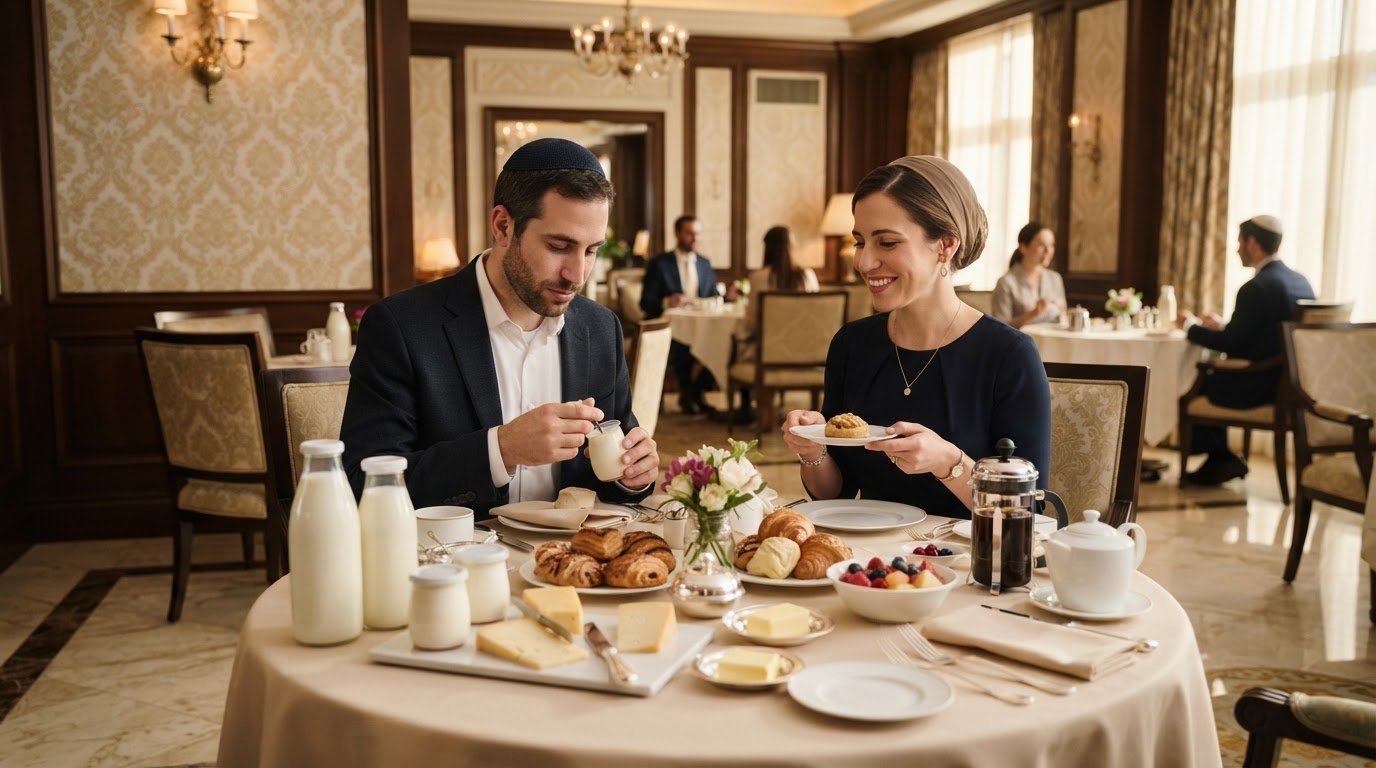
Finding a cholov yisroel breakfast at a hotel starts with knowing what standard you follow, then looking beyond a general “kosher breakfast” label.
A kosher meal description doesn’t automatically mean its dairy is Cholov Yisroel. The term refers to milk produced under Jewish supervision from milking through packaging, a standard that matters to travelers according to their personal practice. At a hotel buffet, labels alone may not explain how food is sourced, supervised, or served.
To compare breakfast arrangements, distinguish your own requirements from general kosher information. Consider which dairy foods you plan to eat, what the available supervision covers, and how food is presented. Clear expectations can make breakfast planning easier and help you choose a stay that suits your needs.
This guide explains what Cholov Yisroel means in a hotel setting, which details to consider when assessing breakfast arrangements, and how to plan around the options available. You’ll learn how to compare offerings without relying on vague labels, so your meals and your stay feel considered from the start.
Finding a Cholov Yisroel Breakfast at a Hotel
Use three questions to evaluate a breakfast: Does the dairy meet your standard? Does the supervision information cover the specific foods you plan to eat? Does the way those foods are served fit your practice? Keeping these questions separate makes it easier to assess a menu, buffet, or packaged option without assuming that a broad kosher label answers them all.
Key Takeaways
- Understand what Cholov Yisroel means and why a general kosher label may not tell you whether dairy meets your personal standard.
- Make finding a cholov yisroel breakfast at a hotel easier by defining your requirements before comparing breakfast arrangements.
- Assess food sourcing, supervision, and service details instead of relying on broad labels or menu descriptions.
- Use a simple planning timeline to separate essential breakfast needs from preferences before travel and at the hotel.
- Weigh breakfast arrangements alongside comfort and Shabbat considerations when choosing a kosher-conscious stay.
What Does Cholov Yisroel Mean for a Hotel Breakfast?
For dairy breakfast foods to meet Cholov Yisroel standards, what must be true about the milk behind them? The central question is sourcing and supervision, not simply whether a hotel describes its breakfast as kosher. A general kosher label may cover important dietary standards without telling you whether the dairy is Cholov Yisroel.
Cholov Yisroel
Basic meaning: Milk produced under Jewish supervision from milking through packaging.
Why sourcing matters: Supervision helps establish that the milk comes from kosher animals and meets the standard followed by the traveler.
The term is also written as Chalav Yisrael. For a broader explanation of its background and how it differs from Cholov Stam, see this overview of Cholov Yisroel. Travelers’ accepted standards can vary by household and rabbinic guidance, so this explanation is a practical starting point, not a religious ruling. Follow the guidance you rely on at home.
How Is Cholov Yisroel Different from Other Kosher Dairy?
Jewish supervision is the defining feature: it applies to the milk’s production, rather than only to how a finished item is described on a hotel menu. A product can be kosher-certified while still not meeting a traveler’s Cholov Yisroel standard. “Kosher breakfast” and “Cholov Yisroel dairy” therefore aren’t interchangeable descriptions. Keep your own household standard in view when interpreting labels or dining information.
Which Breakfast Foods Can Raise Questions?
Look beyond a glass of milk. Yogurt, cheese, cream, and dairy-based baked goods may also contain dairy ingredients whose supervision matters to you. Ingredient lists can show what a product contains, but they don’t necessarily establish its certification or supervision status.
There’s another layer at a hotel buffet. Product supervision and food handling are separate considerations: serving utensils, shared surfaces, and how items are presented may affect whether a food fits your practice. A sealed yogurt with clear labeling raises different questions from cream poured into an unlabeled pitcher or pastries arranged beside other foods. These examples aren’t rulings; they illustrate why “kosher” alone may not answer every practical question.
For finding a cholov yisroel breakfast at a hotel, keep three details distinct: the dairy standard you follow, the sourcing and supervision of each relevant food, and the way it’s served. This distinction gives you a clearer foundation for comparing breakfast arrangements.
How to Assess Whether a Hotel Breakfast Meets Your Standard
Before comparing hotel dining information, write down your own requirements. Which supervision standards do you follow? Which dairy foods matter at breakfast? Is a certified product enough for your practice, or do you rely on a particular supervised meal arrangement? Clear answers make it easier to assess what the available information actually says.
Use this checklist to assess the details:
- Define your standard. Note the Cholov Yisroel supervision accepted by your household or rabbinic guidance, along with any related expectations for serving and handling.
- Identify the foods in scope. Consider which items you’d want to eat, such as milk, yogurt, cheese, cream, or baked goods made with dairy.
- Read the certification precisely. Look for the named certifying authority and determine which products, meals, or dining areas its information covers.
- Check the breakfast connection. Certification or dining information may refer to a restaurant, catered event, or another meal. Look for details that specifically refer to breakfast service.
- Consider the service setup. Product sourcing and certification don’t automatically explain how foods are served, handled, or kept separate at a buffet.
Breakfast sourcing identifies what the dairy is; supervision and service details help show whether it fits the standard you follow.
What Details Should You Look for in Published Dining Information?
Distinguish among three kinds of information. A certified item has certification details that apply to that product. A supervised meal describes an arrangement overseen under stated terms. A general “kosher-friendly” claim may signal an effort to accommodate kosher-conscious guests, but it doesn’t specify Cholov Yisroel sourcing or the exact foods covered.
Look for the certifying authority, the scope of its certification, and whether the information names breakfast rather than dining in general. A menu can help identify foods, but it may not explain their certification or how they’re handled. That distinction matters in finding a cholov yisroel breakfast at a hotel: broad language can be a starting point, not a complete answer.
How Can You Match Hotel Information to Your Practice?
Compare the stated supervision with standards accepted by your household or community. Review current menus and official certification information as part of travel planning, and note what’s essential versus preferred. If terminology remains unclear, use the rabbinic guidance you normally follow rather than treating a general label as a ruling. For broader kosher hotel guidance, consider the stay as a whole, including comfort and Shabbat needs.
For a refined setting to consider as part of your travel plans, explore the featured hotel stay. Koosh Collection’s hospitality focus can inform your choice of accommodation, while breakfast standards are assessed separately according to your practice.
Compare Hotel Breakfast Arrangements Before You Book
Breakfast can be arranged in different ways, and the label alone won’t tell you how each fits your practice. Compare the full meal arrangement: its supervision, the sourcing of the foods you plan to eat, how they’re served, and the practical ease of relying on it. The options below highlight the details to weigh when choosing an arrangement.
| General arrangement | Supervision and sourcing | Convenience and fit |
|---|---|---|
| Hotel-served buffet | May range from general dining information to a specifically supervised breakfast. Look for details that cover the meal and relevant foods. | Convenient if the arrangement matches your practice; a buffet’s breadth alone doesn’t establish that it does. |
| Separately catered meal | Depends on the meal’s supervision, sourcing, and handling from preparation through service. | May offer a distinct setup, but details and logistics depend on the arrangement. |
| Traveler-managed packaged foods | Sealed products with supervision appropriate to your standard can make sourcing more transparent. | Offers control, but selection, storage, and carrying food during travel take planning. |
Hotel-Served Breakfast Versus a Separately Catered Meal
A standard hotel buffet and a separately catered meal are not automatically equivalent. A catered setup may have its own supervision and handling, while a hotel buffet follows its particular service arrangement. Neither description proves Cholov Yisroel status by itself. Consider the full breakfast, including any dairy items you intend to eat and how they are managed, rather than assuming one certified packaged item establishes the status of the entire spread.
Packaged Dairy and Traveler-Managed Alternatives
Bringing sealed, appropriately supervised milk, yogurt, or another dairy item may offer more clarity if you prefer not to rely on buffet sourcing. The trade-off is practical: you’ll need to plan what to bring, how to store it, and whether it suits your breakfast routine. This approach may complement other arrangements, but it doesn’t answer separate questions about foods prepared or served by the hotel.
As you compare options for finding a cholov yisroel breakfast at a hotel, weigh sourcing clarity against convenience and your own requirements. For broader kosher dining information, consider the property’s dining context as part of planning your stay, while assessing breakfast arrangements separately.

Plan a Cholov Yisroel Hotel Breakfast Step by Step
A little preparation can turn breakfast from an open question into a clear part of your travel plan. Keep a short note with your required supervision standard, the foods you need, and which details are essential versus preferred. Then move through the trip in three stages.
Before Booking
- Review current information. Read the hotel’s dining details and applicable certification information for the intended stay. Check that details refer to breakfast and the foods you expect to eat, rather than another meal or general dining.
- Compare with your practice. Consider your household’s supervision requirements, dietary needs, and breakfast routine. If you’re traveling with family, record each person’s essential needs separately from preferences.
- Plan around the day. Note likely breakfast timing, early departures, and any Shabbat considerations that shape your stay. Include hotel amenities and stay details in your broader planning, without assuming a particular amenity or food arrangement.
Before Travel
Make a practical plan based on the information you’ve reviewed. If you intend to bring sealed foods that meet your standard, consider what to pack and how they’ll be stored during the trip. Keep a backup option in mind, especially if breakfast timing is tight or a child has familiar food needs. A simple plan is more useful than relying on vague expectations.
For finding a cholov yisroel breakfast at a hotel, separate must-haves from conveniences. For example, a required dairy standard is an essential need; a wider selection may be a preference. This distinction helps you compare arrangements without losing sight of what matters most.
At Breakfast
Use your notes to guide decisions in the moment. Follow the supervision information that fits your practice, and consider how items are presented and handled. If the setup doesn’t align with your requirements, use the backup plan you prepared rather than treating a general kosher-friendly description as a substitute for specific information.
Families may want to allow extra time for children’s routines, while travelers with early departures can plan a suitable option in advance. For Shabbat, factor meal timing and the wider stay into your arrangements, following the practices that apply to your household.
With meal needs mapped out, you can focus on choosing a stay that feels comfortable and considered. Explore a refined hotel stay as one part of your travel planning, while keeping breakfast requirements distinct and specific.
Choose a Kosher-Conscious Hotel Stay That Feels Effortless
A comfortable observant stay comes together when the practical details align. Breakfast is one part of the picture, alongside the room, your family’s needs, daily schedule, and any Shabbat considerations. Koosh Collection focuses on luxury accommodations with kosher-friendly and Shabbat-friendly hospitality, offering a thoughtful setting for travel planning. Assess breakfast sourcing and supervision according to your own standard as part of those plans.
What Makes a Hotel a Better Fit for an Observant Stay?
Look for a stay that supports your routine as well as your comfort. A clear meal plan can help you decide how breakfast fits into the day, while the hotel experience shapes how restful and convenient the trip feels overall. For Shabbat-friendly stay planning, consider your household’s needs alongside the arrangements you’ve established for meals and observance. Keep each question distinct: a hotel’s general kosher-friendly positioning is not proof that a particular food meets your Cholov Yisroel standard.
Before making your choice, use this concise checklist:
- Required standard: Record the supervision and handling practices your household follows.
- Meal information: Review the current details for the specific breakfast foods and arrangement you intend to rely on.
- Stay priorities: Weigh comfort, family needs, schedule, and Shabbat considerations alongside dining plans.
- Backup plan: Decide what you’ll do if the breakfast setup doesn’t fit your requirements.
This framework keeps finding a cholov yisroel breakfast at a hotel in perspective. It’s a precise meal-planning question, but it needn’t be the only measure of a well-chosen stay. Separating essential food standards from broader preferences helps you plan with confidence and set realistic expectations.
Explore a Refined Hotel Stay with Koosh Collection
Koosh Collection features a premier luxury hotel property as part of its upscale hospitality offering. Consider the hotel experience in the context of the stay you want, from comfort to the practical rhythm of travel. Then assess breakfast according to the specific sourcing and supervision information that matters to your practice.
Explore the featured hotel stay as you plan a visit with your priorities in view.
Plan a Stay That Fits Your Standards
Finding a cholov yisroel breakfast at a hotel starts with knowing your own standard, then looking beyond a broad “kosher” label. Review which foods and meal arrangements are covered by the available supervision, and consider how breakfast fits alongside your schedule, comfort, and Shabbat needs. A practical backup plan can make the morning feel more settled, too.
Koosh Collection focuses on luxury hotel accommodations with kosher-friendly and Shabbat-friendly hospitality. That broader experience can help shape a considered trip, while breakfast sourcing and supervision remain separate details to assess according to your practice.
Explore the Dolce by Wyndham hotel stay as you plan a comfortable visit around the priorities that matter to you.
Frequently Asked Questions
What does Cholov Yisroel mean at a hotel breakfast?
Cholov Yisroel refers to milk produced under Jewish supervision from milking through packaging. At a hotel breakfast, the question is whether the dairy foods you plan to eat meet the standard you follow, not simply whether the meal is described as kosher. Milk, yogurt, cream, cheese, and dairy-based baked goods may each require consideration. Follow the guidance accepted by your household or rabbinic authority.
Is every kosher hotel breakfast Cholov Yisroel?
No. A kosher description or certification doesn’t automatically establish that dairy products are Cholov Yisroel. Certification may apply to particular foods, a dining area, or a meal arrangement, and those details can differ. Look for information that specifically identifies the breakfast foods and supervision involved. Travelers’ practices also vary, so compare the stated arrangement with the standard you follow rather than relying on a general label.
How can I tell whether hotel milk is Cholov Yisroel?
Look for clear product labeling and reliable kosher certification that identifies the milk as Cholov Yisroel, then compare the supervision with the standard you follow. A pitcher at a buffet may not display the original packaging, and a menu description alone may not identify the milk’s sourcing. If the information doesn’t make the product’s status clear, don’t assume it meets your practice; use guidance you trust.
Can a hotel buffet include Cholov Yisroel dairy products?
Yes, a buffet could include dairy products that meet Cholov Yisroel standards, but the word “buffet” doesn’t establish their status. Consider the supervision and sourcing of each relevant item, as well as how it’s presented and served. One sealed, certified product doesn’t necessarily determine the status of the rest of the meal. Assess the complete arrangement according to your household’s practice.
What should I check before booking a hotel for Cholov Yisroel breakfast?
Before booking, write down your required standard and the dairy foods you expect to rely on. Review current dining information and applicable certification details, checking whether they specifically cover breakfast rather than another meal or event. Consider serving and handling arrangements, breakfast timing, and family needs. For finding a cholov yisroel breakfast at a hotel, this focused review helps distinguish relevant details from broad kosher-friendly descriptions.
Are packaged dairy products a useful option when traveling?
They can be a practical alternative when sealed products carry supervision that fits your standard. Packaged milk or yogurt may make sourcing easier to identify than an unlabeled buffet item, but you’ll need to plan what to bring and how to store it. Selection and convenience may also be limited by your travel routine. Packaged foods don’t answer separate questions about other foods or hotel food handling.
What can I do if a hotel breakfast does not fit my standards?
Use a backup plan that reflects your practice. Depending on your guidance, that might mean bringing sealed, appropriately supervised food or choosing other options you consider suitable. Some travelers rely on whole fresh fruit or sealed products with a reliable kosher symbol when a hotel breakfast doesn’t fit their needs, while buffet-prepared foods can raise handling concerns. Follow the standards you rely on at home.